






What's Happening?
A Canadian passenger aboard the MV Hondius cruise ship has tested positive for the Andes hantavirus, as announced by the Public Health Agency of Canada. The individual, along with their spouse who is experiencing mild symptoms, has been hospitalized and
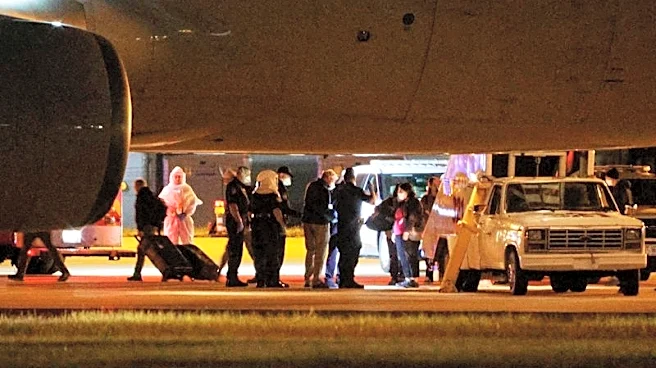
placed in isolation. A third person, also in isolation, was taken to the hospital for further assessment. The agency is conducting confirmatory testing at its National Microbiology Laboratory in Winnipeg, with results expected shortly. Despite the severity of the virus, the overall risk to the Canadian public is considered low. In the U.S., Washington state health officials are investigating six potential cases of Andes hantavirus, five of which involve individuals who were on an international flight with the infected cruise passenger. The sixth person was exposed on the cruise ship. All individuals are being monitored for symptoms. Additionally, a separate case of the Sin Nombre hantavirus has been reported in Washington, unrelated to the cruise outbreak.
Why It's Important?
The detection of the Andes hantavirus in a cruise passenger highlights the potential for infectious diseases to spread through international travel, posing challenges for public health systems. The situation underscores the importance of rapid response and monitoring to prevent wider outbreaks. The hantavirus, while rare, can cause severe illness and even death, necessitating a cautious approach by health authorities. The investigation in Washington state reflects the interconnected nature of global health, where an incident in one country can have implications for another. This case also emphasizes the need for robust health protocols on cruise ships and other forms of mass transportation to protect passengers and the general public.
What's Next?
Health authorities in Canada and the U.S. will continue to monitor the situation closely, with Canadian officials tracking 36 individuals, including four cruise passengers, currently in isolation. The results of the confirmatory tests from the National Microbiology Laboratory will guide further actions. In Washington state, health officials will maintain surveillance of the six potential cases and provide updates as necessary. The situation may prompt a review of health protocols on cruise ships and international flights to mitigate future risks. Public health agencies are likely to enhance communication and coordination to manage the potential spread of the virus effectively.