




What's Happening?
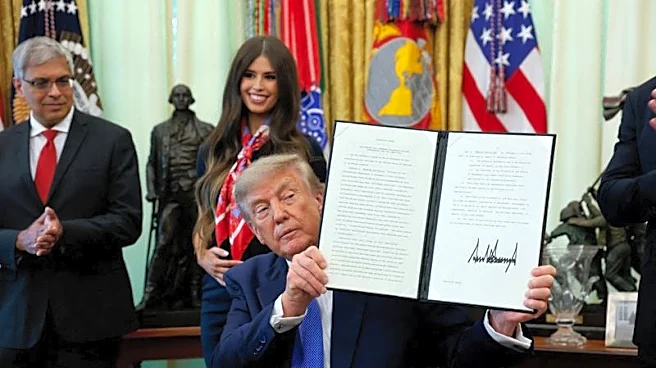
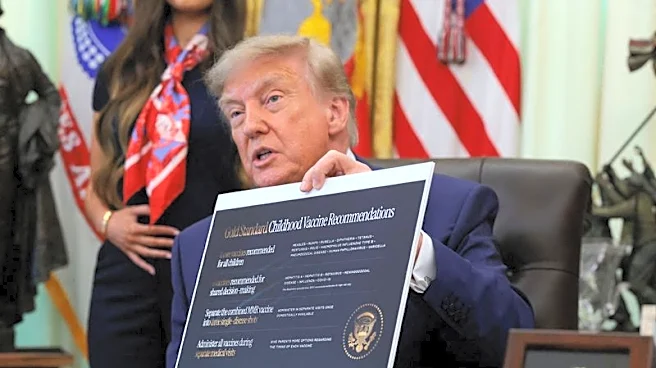
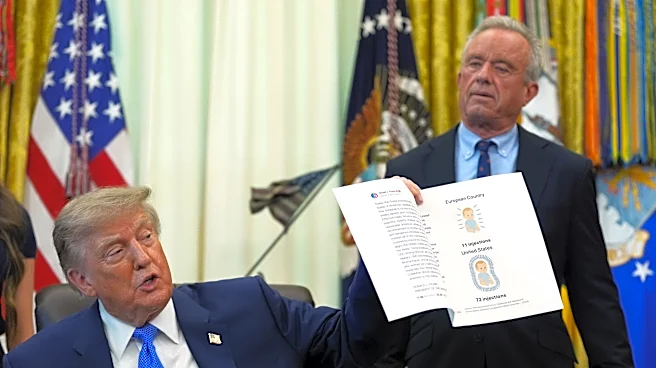
President Donald Trump has signed an executive order that aims to change the administration of childhood vaccinations in the United States. The order proposes reducing the number of recommended vaccinations and separating the measles, mumps, and rubella
(MMR) vaccine into individual shots. Trump claims, without scientific backing, that the combined MMR vaccine could be harmful. The American Academy of Pediatrics has criticized the order, suggesting it could lead to confusion and increased vaccine hesitancy. The order's implementation is uncertain, as it requires the production of individual vaccines that are not currently available in the U.S. The move has been met with resistance from medical professionals who argue that the current vaccination schedule is based on scientific evidence and is crucial for public health.
Why It's Important?
The executive order has significant implications for public health policy in the U.S. By challenging the established vaccination schedule, it risks increasing vaccine hesitancy and potentially lowering vaccination rates. This could lead to outbreaks of preventable diseases, as seen in other countries that have altered their vaccination strategies. The order also highlights the ongoing politicization of public health issues, which can undermine trust in medical advice and public health initiatives. The controversy underscores the tension between political decisions and scientific recommendations, with potential consequences for children's health and public safety.
What's Next?
The executive order's future is uncertain, as it depends on the development and approval of individual vaccines for measles, mumps, and rubella. Legal challenges are likely, as seen with previous attempts to alter vaccination policies. Medical organizations and public health experts are expected to continue advocating for adherence to the current vaccination schedule. The debate may also influence upcoming political discussions and policies related to public health and vaccination. Stakeholders, including parents, healthcare providers, and policymakers, will need to navigate the implications of the order and its potential impact on public health.