



What's Happening?
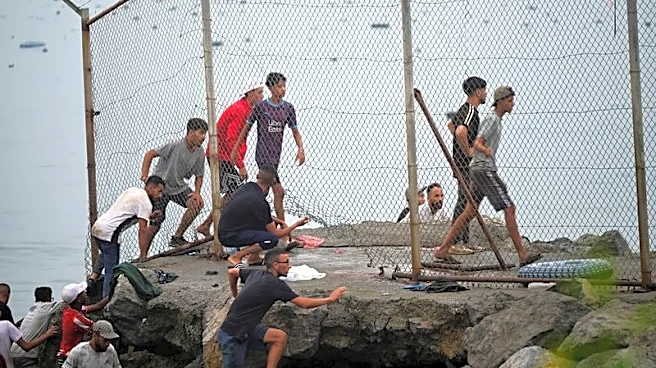
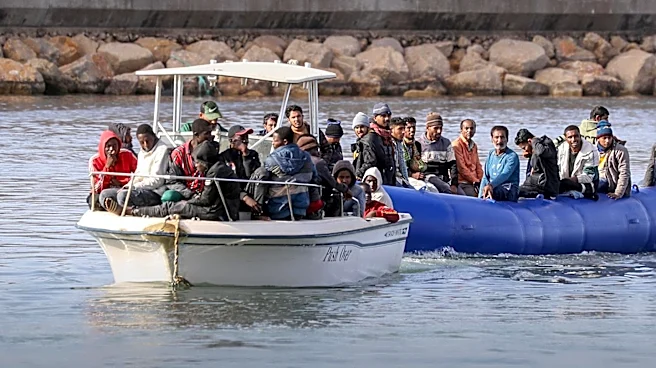
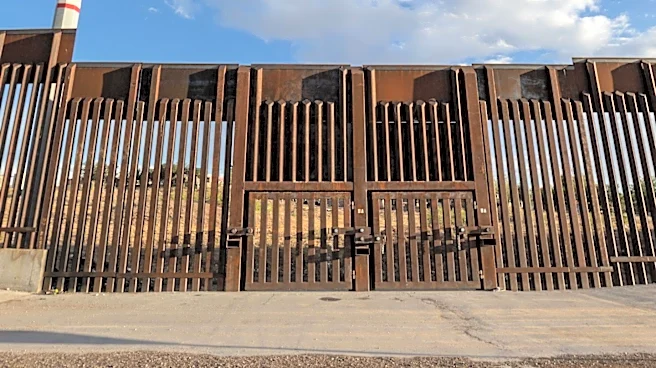
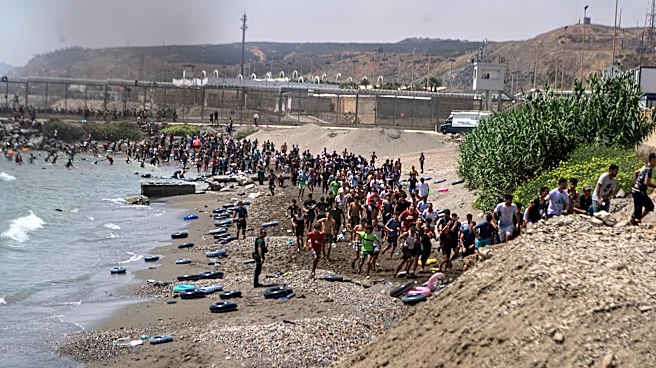
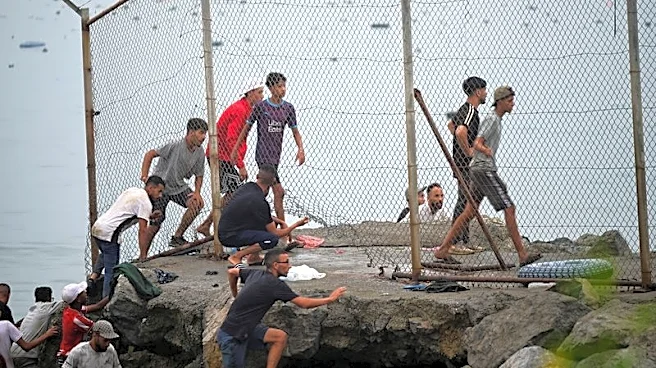
In the past 24 hours, the Spanish territory of Ceuta has experienced a significant influx of migrants from Morocco. Approximately 60,000 individuals are estimated to have crossed into this North African enclave, which has long been a focal point for those
attempting to reach Europe. Tragically, dozens have died during the crossing. Spanish officials have reported that over 48,000 migrants have voluntarily returned to Morocco. The surge in crossings has raised questions about the factors driving this movement and the subsequent actions that will be taken.
Why It's Important?
The mass crossings into Ceuta underscore the ongoing challenges faced by European countries in managing migration flows from Africa. This situation highlights the complex socio-political and economic factors driving migration, including poverty, political instability, and the search for better opportunities. The response by Spanish authorities, including the voluntary return of many migrants, reflects the delicate balance between humanitarian concerns and border security. This event could influence future European Union policies on migration and border control, impacting diplomatic relations between Spain, Morocco, and the broader EU.
What's Next?
The immediate focus will likely be on managing the humanitarian needs of those who have crossed into Ceuta and ensuring their safe return or integration. Spanish and Moroccan authorities may engage in diplomatic discussions to address the root causes of migration and improve border management. The European Union might also consider revisiting its migration policies to better support member states facing similar challenges. The situation could prompt increased international attention and aid to address the underlying issues driving migration from Africa.