

What's Happening?
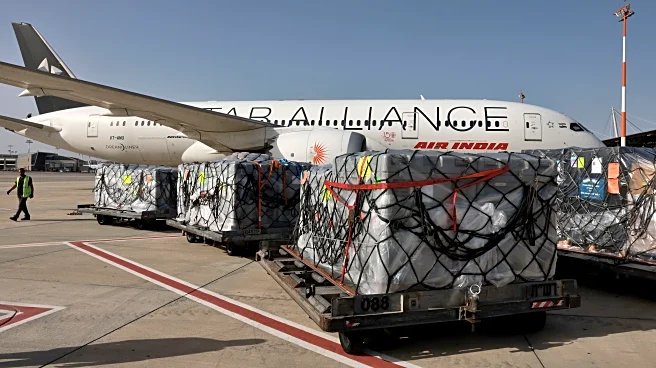
Following military strikes by the United States and Israel on Iran, global airlines have canceled flights across the Middle East. The strikes have led to heightened tensions in the region, prompting the European Union's aviation regulator to advise airlines to avoid
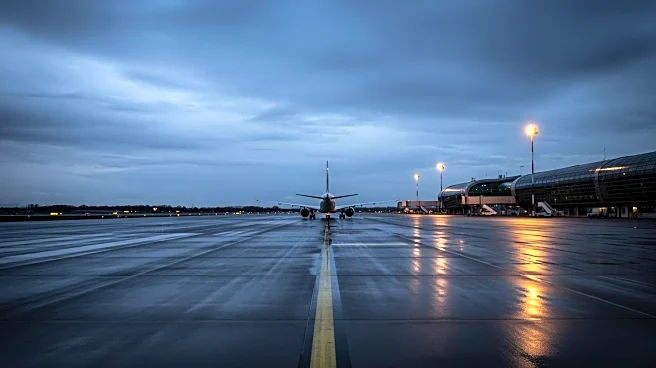
the affected airspace. As a result, airspace over Iran, Iraq, Kuwait, the United Arab Emirates, Lebanon, Bahrain, and Jordan was largely empty. Airlines such as AEGEAN, Air France KLM, British Airways, Lufthansa, and Turkish Airlines have suspended flights to various Middle Eastern destinations. The cancellations are expected to last until early March, with some airlines extending suspensions until March 7. The situation remains fluid, with airlines continuously reviewing operational decisions.
Why It's Important?
The cancellation of flights by major airlines highlights the significant impact of geopolitical tensions on global travel and commerce. The disruption affects not only the airlines but also passengers and businesses relying on air travel for connectivity and trade. The closure of airspace in a critical region like the Middle East can lead to increased travel times, higher operational costs for airlines, and potential economic repercussions for countries dependent on tourism and international business. Additionally, the situation underscores the vulnerability of global transportation networks to political and military conflicts, emphasizing the need for robust contingency planning by airlines and regulatory bodies.