







What's Happening?
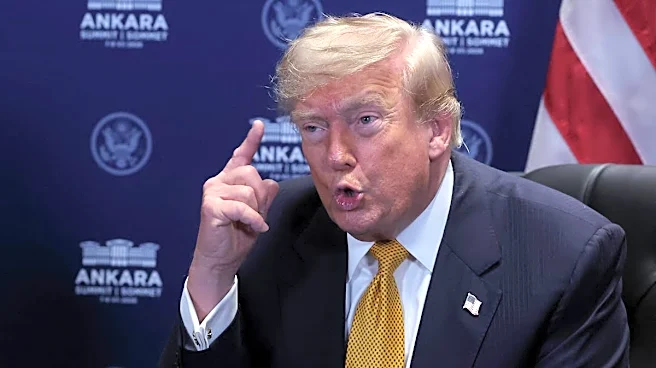
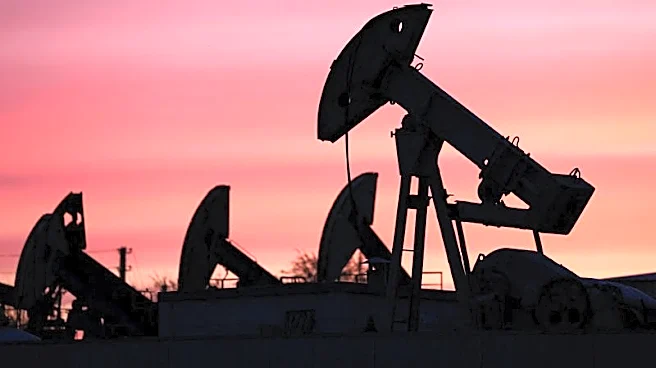
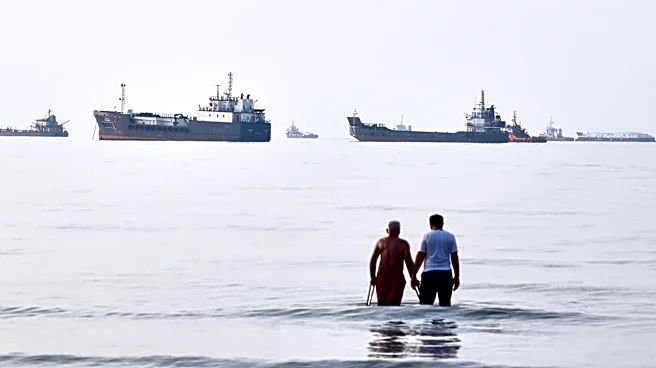
Oil prices have surged following President Trump's announcement to reinstate a blockade on Iranian ships in the Strait of Hormuz and impose a 20% transit fee on other cargo. This decision has reignited concerns over global energy supplies, with West Texas
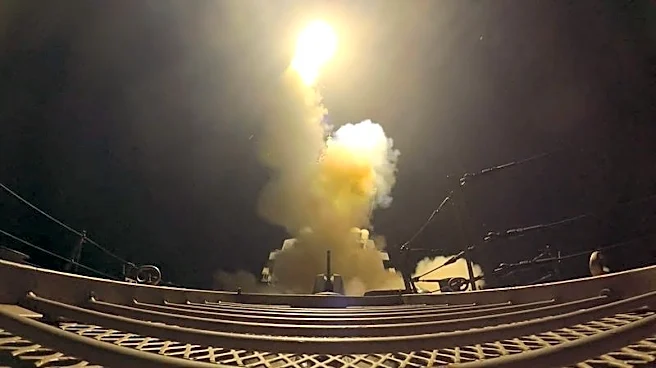
Intermediate futures rising by 9.4% to nearly $78 per barrel. The move comes amid escalating tensions between the U.S. and Iran, including recent military strikes. The proposed transit fee could significantly increase shipping costs, potentially leading to higher crude prices. The International Maritime Organization has expressed opposition to charging fees for passage through international straits.
Why It's Important?
The reinstatement of the Hormuz blockade and the proposed transit fee have significant implications for global oil markets. The Strait of Hormuz is a critical chokepoint for oil transit, and any disruption can lead to increased oil prices, affecting global economies. The U.S. decision to enforce the blockade and impose fees could escalate tensions in the region, potentially leading to further conflicts. The increased geopolitical risk premium on crude markets highlights the fragility of global energy supply chains and the potential for significant economic impacts.
What's Next?
The enforcement of the blockade and the proposed transit fee could lead to further geopolitical tensions and potential retaliatory actions from affected countries. The U.S. may face diplomatic challenges in justifying the transit fee to international partners. The situation requires careful monitoring as it could lead to broader conflicts affecting global energy infrastructure. Stakeholders in the oil industry and governments may need to explore alternative routes or strategies to mitigate the impact of the blockade on global oil supply.