
What's Happening?
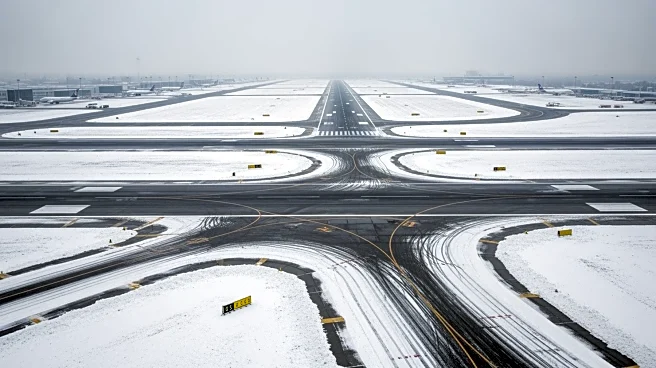
Amsterdam's Schiphol Airport has been severely affected by winter weather, leading to the cancellation of more than 2,500 flights over a five-day period. The disruptions began last Friday and continued
through Tuesday, with the cancellation rate escalating from 28% to over half of all scheduled flights by Monday. Schiphol, one of Europe's busiest airports, handling over 66 million passengers annually, has seen significant delays and diversions. KLM, the Dutch flag carrier, reported that flights were forced to taxi for extended periods, with some returning to gates after hours on the tarmac. The adverse weather conditions have also led to diversions of incoming flights to other European cities such as Frankfurt, Paris, and Brussels. The airport is operating with limited flight operations and is closely monitoring the weather situation.
Why It's Important?
The flight cancellations and delays at Schiphol Airport highlight the vulnerability of major transportation hubs to severe weather conditions. As a key transit point for international travelers, disruptions at Schiphol can have a ripple effect on global travel, affecting passengers and airlines worldwide. The situation underscores the importance of robust contingency planning and infrastructure resilience in the face of extreme weather events. Airlines and passengers face significant financial and logistical challenges, with potential impacts on tourism and business travel. The need for efficient de-icing operations and weather monitoring systems is critical to minimize such disruptions in the future.
What's Next?
With the winter conditions expected to persist, Schiphol Airport and airlines like KLM are likely to continue facing operational challenges. The airport will need to manage de-icing operations efficiently to reduce delays and ensure safety. Airlines may need to adjust schedules and reroute flights to mitigate the impact on passengers. Travelers are advised to stay informed about flight statuses and potential changes. The situation may prompt discussions on improving infrastructure and emergency response strategies to better handle similar events in the future.