


What's Happening?
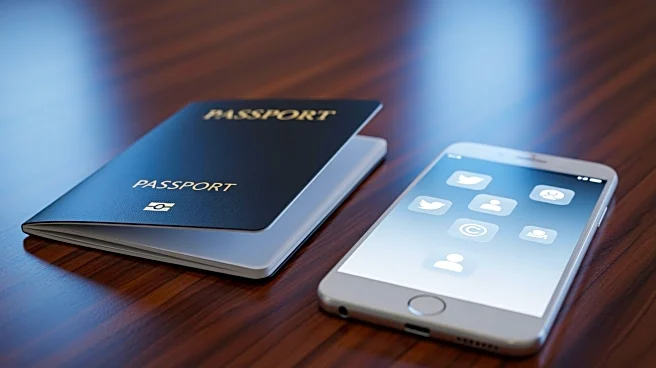
The Trump administration has introduced a proposal requiring foreign visitors traveling to the United States under the visa waiver program to provide access to their social media accounts. This proposal mandates that travelers using the Electronic System
for Travel Authorization (ESTA) must allow U.S. immigration and customs authorities to review five years of their social media activity. The requirement would apply to citizens from 42 countries, including Australia, France, Germany, Japan, and the UK, who currently enjoy visa-free travel to the U.S. In addition to social media data, visitors would need to provide all phone numbers used in the past five years, email addresses from the past decade, personal details of family members, and biometric data. The proposal, published in the Federal Register, is open for public comment for 60 days before potentially becoming law.
Why It's Important?
This proposal represents a significant shift in U.S. immigration policy, reflecting the Trump administration's stringent stance on national security and immigration. By requiring extensive personal data from visa-free travelers, the administration aims to enhance security measures against potential foreign threats. However, this move could have implications for international relations, potentially affecting tourism and business travel to the U.S. Critics may argue that such measures infringe on privacy rights and could deter visitors, impacting the U.S. economy. The proposal underscores the administration's focus on security over privacy, raising concerns about the balance between national security and individual freedoms.
What's Next?
The proposal is currently open for public comment, allowing stakeholders, including civil rights groups, international travelers, and foreign governments, to express their views. If the proposal faces significant opposition, it could be challenged in court, delaying or preventing its implementation. The outcome of this public consultation period will determine whether the proposal becomes law. Should it proceed, the U.S. may face diplomatic challenges from countries whose citizens are affected, potentially leading to reciprocal measures or strained relations.