







What's Happening?
Wyoming residents, facing limited options for firewood compared to other regions, primarily rely on local species such as pine, fir, spruce, and cottonwood. According to Wyoming State Forester Kelly Norris and local experts like Andy Ward of Bear Claw
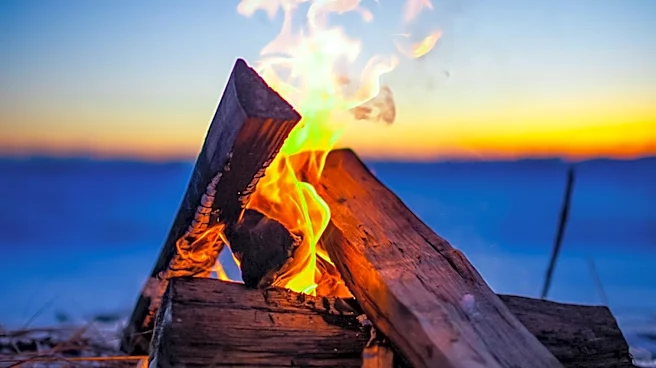
Services LLC, the most crucial factor for effective and clean burning is the wood's dryness, not necessarily its species. Kevin Coffman, a chimney sweep, emphasizes that burning habits and moisture content are more significant than the type of wood in preventing creosote buildup and ensuring efficiency. He recommends a moisture content of 15% to 20% and advises using an inexpensive moisture meter. While lodgepole pine and Douglas fir are favored for their heat output and burn duration, even less popular options like cottonwood have their uses, particularly when properly seasoned.
Why It's Important?
This focus on wood dryness has significant implications for home heating efficiency, safety, and environmental impact in Wyoming. Burning wet wood is less efficient, produces less heat, and generates more smoke and creosote, increasing the risk of chimney fires and contributing to air pollution. By prioritizing seasoned wood, residents can maximize heat output, reduce fuel consumption, and minimize maintenance costs for their heating systems. This practice also aligns with broader environmental goals by reducing particulate matter emissions. The limited availability of diverse wood species in Wyoming underscores the importance of understanding the properties of local resources and optimizing their use, highlighting a practical approach to sustainable living in a resource-constrained environment.
What's Next?
Wyoming residents are encouraged to invest in moisture meters to ensure their firewood is adequately seasoned before burning. Educational efforts from forestry services and local businesses will likely continue to promote best practices for wood storage and burning. The demand for properly seasoned wood may also influence local firewood suppliers to focus on drying processes. Furthermore, the utilization of beetle-killed timber, which is already drier, is expected to continue as a valuable resource, potentially contributing to forest management efforts by reducing wildfire fuels. The ongoing challenge will be to balance the cost of transportation for denser hardwoods with the efficiency and environmental benefits of burning local, well-seasoned softwoods.
Beyond the Headlines
The discussion around firewood in Wyoming extends beyond mere heating to touch upon cultural practices, resource management, and community resilience. The reliance on local, often less-dense, wood species reflects a deep connection to the immediate environment and an adaptive approach to resource utilization. The emphasis on proper seasoning highlights a practical wisdom passed down through generations, now reinforced by scientific understanding of combustion. This local context also sheds light on the broader economic realities of rural areas, where the cost of transporting goods, including firewood, significantly impacts consumer choices. Ultimately, the 'best' firewood in Wyoming is not just about BTUs but also about accessibility, affordability, and the knowledge to use available resources safely and efficiently, embodying a self-reliant ethos in a challenging climate.