
What's Happening?
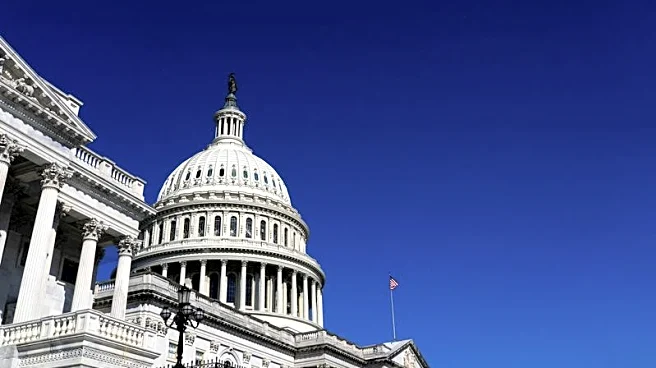
The federal government is experiencing a partial shutdown this weekend after Congress failed to secure funding for several major agencies and departments by the Friday night deadline. This development
has led to a halt in operations for parts of the government, affecting various services and employees. The shutdown is a result of ongoing disagreements within Congress over budget allocations and priorities, which have prevented the passage of necessary funding legislation.
Why It's Important?
A government shutdown can have significant implications for the U.S. economy and public services. It disrupts the operations of federal agencies, potentially delaying services and affecting government employees who may face furloughs or work without pay. The shutdown also reflects broader political challenges, highlighting the difficulties in reaching bipartisan agreements on budgetary issues. This situation underscores the need for effective negotiation and compromise within Congress to ensure the continuity of government functions and services.
What's Next?
The resolution of the partial government shutdown will depend on Congress's ability to reach an agreement on funding. Lawmakers will need to negotiate and compromise on budgetary issues to pass the necessary legislation. The outcome of these discussions will determine when and how the affected government agencies can resume full operations. Stakeholders, including government employees and the public, will be closely monitoring developments, hoping for a swift resolution to minimize disruptions.