

What's Happening?
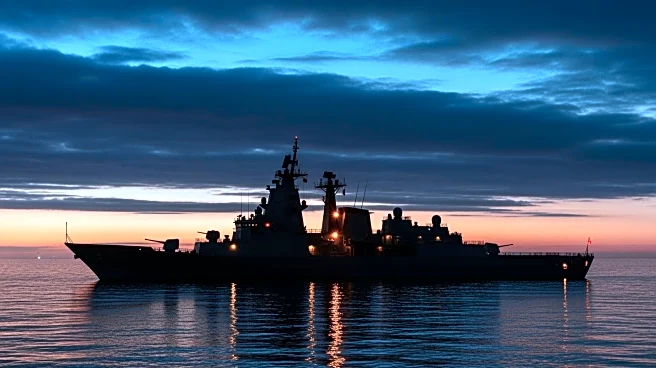
The United States has deployed the 31st Marine Expeditionary Unit (MEU) to the Middle East in response to escalating tensions with Iran. This deployment includes approximately 2,200 marines aboard three US Navy amphibious assault ships. The MEU is uniquely
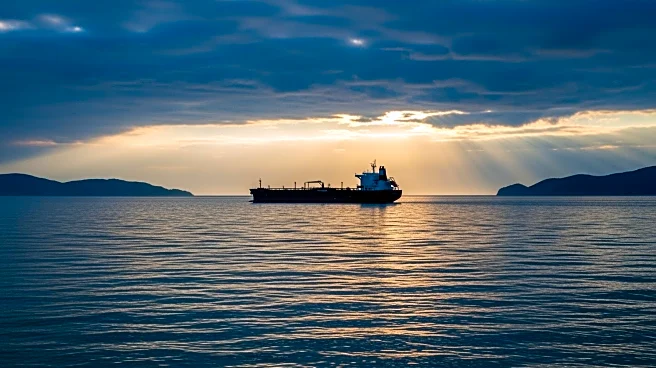
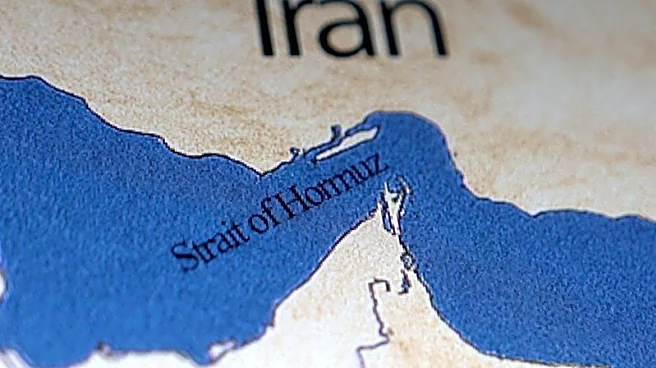
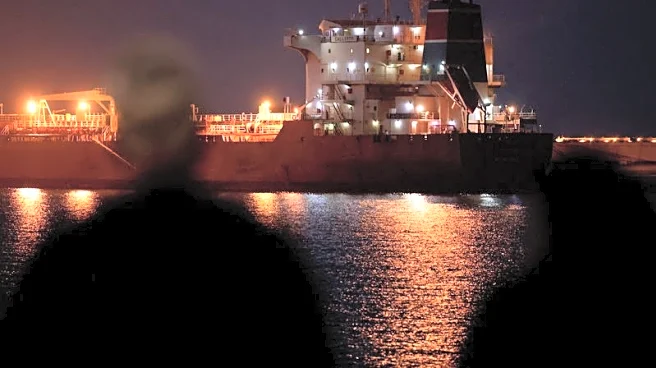
capable of conducting large-scale amphibious operations, which are crucial given the current conflict dynamics with Iran. The deployment follows Iran's closure of the Strait of Hormuz, a critical passage for global energy markets, after US and Israeli forces attacked Iran on February 28. The MEU's capabilities include launching task-organized units and providing logistical and aerial support, making it a self-contained combat force. This move is seen as a strategic positioning to potentially secure key terrains and deny Iranian forces the ability to disrupt maritime traffic.
Why It's Important?
The deployment of the 31st MEU underscores the strategic importance of the Strait of Hormuz, a vital chokepoint for global oil shipments. The closure of this strait by Iran has significant implications for global energy markets, potentially leading to increased oil prices and economic instability. The presence of the MEU in the region serves as a deterrent to further Iranian aggression and signals the US's commitment to maintaining open sea lanes. Additionally, this deployment highlights the US military's readiness to respond to international crises and protect its interests abroad. The move also sends a message to other regional powers, such as China and North Korea, about the US's military capabilities and strategic priorities.
What's Next?
The deployment of the MEU could lead to further military engagements if Iran continues to threaten maritime security in the region. The US may increase its military presence or engage in joint operations with allies to ensure the reopening of the Strait of Hormuz. Diplomatic efforts may also intensify to de-escalate tensions and negotiate a resolution to the conflict. The situation remains fluid, and the US's next steps will likely depend on Iran's actions and the broader geopolitical landscape. The potential for a larger military conflict remains, with significant implications for regional stability and international relations.
Beyond the Headlines
The deployment of the MEU raises questions about the long-term US strategy in the Middle East and its implications for regional power dynamics. The focus on military solutions may overshadow diplomatic efforts to address underlying issues, such as Iran's nuclear ambitions and regional influence. The situation also highlights the challenges of achieving regime change through military means, as seen in previous conflicts. The US's actions may influence its relationships with allies and adversaries, shaping future foreign policy decisions. Additionally, the reliance on military force underscores the need for comprehensive strategies that integrate diplomatic, economic, and military tools to address complex international challenges.