




What's Happening?
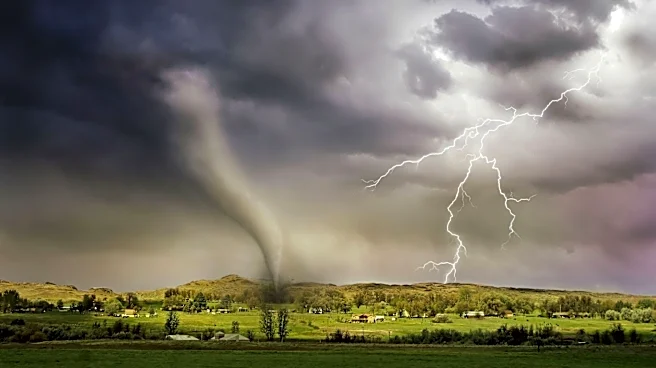
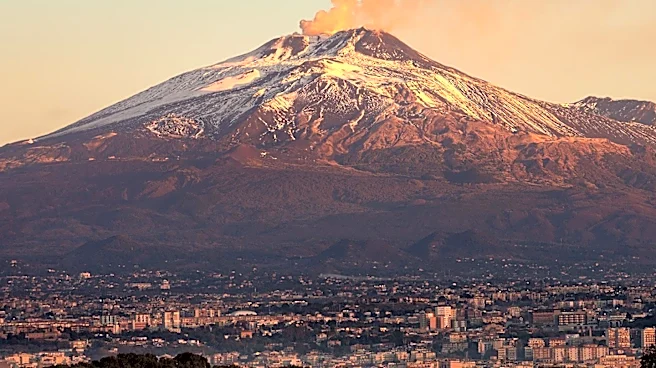
An American tourist from Kansas, aged 29, died after being struck by lightning while hiking on Sicily's Mount Etna. The incident occurred on Sunday evening in an exposed area above the tree line, which was closed to visitors due to recent volcanic activity.
Italian firefighters rescued the man by helicopter, but he was later declared dead by medical personnel. His name has not been released. Authorities had previously closed vast areas of the volcano's slope to hikers due to prolonged volcanic activity, which had also led to the closure of the airport in nearby Catania for most of the previous week. Officials noted that more fatalities on Mount Etna in recent decades have been attributed to lightning strikes than to volcanic activity, with the last eruption-related deaths occurring in 1987.
Why It's Important?
This tragic incident underscores the inherent dangers of hiking in active volcanic regions, particularly when areas are officially closed due to hazardous conditions. The fact that lightning strikes have caused more deaths on Mount Etna than volcanic activity in recent decades highlights an often-underestimated risk associated with such environments. For U.S. citizens traveling abroad, this serves as a stark reminder of the importance of adhering to local safety regulations and warnings, especially in natural areas prone to unpredictable weather and geological events. The closure of the area was a clear indication of danger, and disregarding such warnings can have fatal consequences. This event also brings attention to the broader issue of tourist safety in popular but potentially dangerous natural attractions worldwide, prompting a re-evaluation of personal risk assessment and adherence to official advisories when engaging in adventure tourism.
What's Next?
Following the incident, local authorities in Sicily will likely continue to enforce closures and warnings for hazardous areas on Mount Etna. Investigations into the circumstances surrounding the hiker's presence in a closed area may occur to understand if any additional safety measures or enforcement protocols are needed. For American tourists, this event may lead to increased awareness campaigns from travel advisories or tour operators regarding the specific risks of hiking in volcanic regions and the critical importance of respecting local safety guidelines. The U.S. Embassy or Consulate in Italy may also provide assistance to the family of the deceased. This incident serves as a somber reminder for all visitors to exercise extreme caution and prioritize safety when exploring natural wonders, especially those with known environmental hazards.
Beyond the Headlines
The death of the Kansas man on Mount Etna highlights a broader issue concerning the balance between adventure tourism and personal safety. In an era where unique and challenging travel experiences are increasingly sought after, the allure of natural wonders like active volcanoes can sometimes overshadow the inherent risks. This incident prompts reflection on the responsibility of individuals to heed warnings and the role of authorities in communicating and enforcing safety regulations. It also touches upon the psychological aspect of risk-taking, where the desire for extraordinary experiences can sometimes lead to underestimating dangers. The statistic that lightning strikes are a greater cause of death on Etna than eruptions is particularly striking, challenging common perceptions of volcanic hazards and emphasizing the need for comprehensive risk education for tourists. This tragedy could contribute to discussions about how to better inform and protect adventurers in high-risk natural environments globally, ensuring that the pursuit of unique experiences does not come at the cost of human life.