



What's Happening?
U.S. Rep. John Joyce, a Republican representing Blair County, Pennsylvania, has formally requested information from Norfolk Southern and the Federal Railroad Administration following at least four train derailments in Blair County since February. The
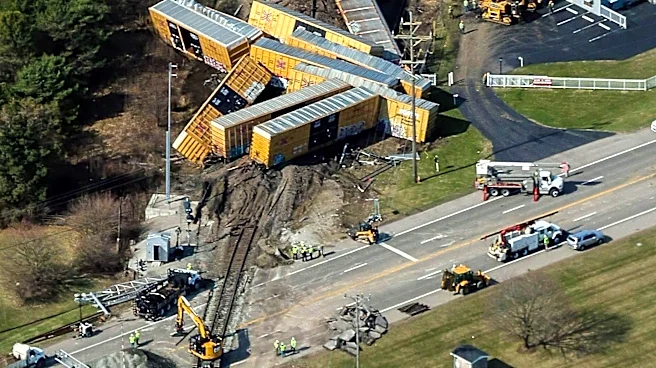
most recent incident occurred on October 23 in Altoona, where 11 railcars derailed, including three tank cars carrying liquefied petroleum gas. While no leaks, spills, or injuries were reported in this specific incident, the frequency of derailments has prompted concern. Representative Joyce has sent letters seeking details on completed investigations, emergency response procedures, and preventative measures being implemented. He also criticized Norfolk Southern's handling of the increased derailments, emphasizing the need for accountability and adherence to safety standards. The October 23 derailment also led to the disruption of Amtrak service between Harrisburg and Pittsburgh, with alternate bus transportation arranged for affected passengers. This action follows a meeting between Joyce and local fire department officials to discuss rail safety and emergency response concerns.
Why It's Important?
The series of train derailments in Blair County, particularly those involving hazardous materials, raises significant safety concerns for local communities and the broader transportation network. The involvement of liquefied petroleum gas in the recent Altoona derailment highlights the potential for severe environmental and public health consequences if a leak or spill were to occur. Representative Joyce's intervention underscores the role of federal oversight in ensuring railroad companies maintain stringent safety protocols. The disruption to Amtrak service also illustrates the economic and logistical impact of such incidents on passenger travel and regional connectivity. Holding Norfolk Southern accountable for these incidents is crucial for rebuilding public trust and ensuring the safety of rail operations, which are vital for both freight and passenger transport across the U.S. The ongoing scrutiny from federal lawmakers could lead to increased regulatory pressure on railroad companies nationwide.
What's Next?
Representative Joyce's letters to the Federal Railroad Administration and Norfolk Southern are expected to prompt detailed responses regarding the causes of the derailments, the findings of any investigations, and the specific actions being taken to prevent future occurrences. The information gathered will likely inform further legislative efforts or regulatory changes aimed at enhancing rail safety. As a co-sponsor of the proposed Railway Safety Act of 2026, Representative Joyce's current actions could lend momentum to this bipartisan legislation, which seeks to update freight-car safety regulations and improve coordination for local first responders. The ongoing dialogue between federal officials, railroad companies, and local emergency services will be critical in developing and implementing more robust safety measures. Communities affected by these derailments will be closely watching for tangible improvements in rail safety and emergency preparedness.
Beyond the Headlines
The recurring train derailments in Blair County point to a broader national conversation about the aging infrastructure of the U.S. rail system and the adequacy of current safety regulations. Beyond the immediate concerns of hazardous material transport, these incidents highlight the potential for long-term environmental damage, economic disruption, and erosion of public confidence in rail transportation. The focus on Norfolk Southern's accountability could set a precedent for how other major railroad companies are held responsible for safety lapses. Furthermore, the emphasis on improving coordination and support for local first responders underscores the critical need for robust emergency preparedness plans, especially in areas where hazardous materials are frequently transported by rail. This situation could also reignite debates about federal funding for rail infrastructure upgrades and the balance between economic efficiency and public safety in the freight industry.