




What's Happening?
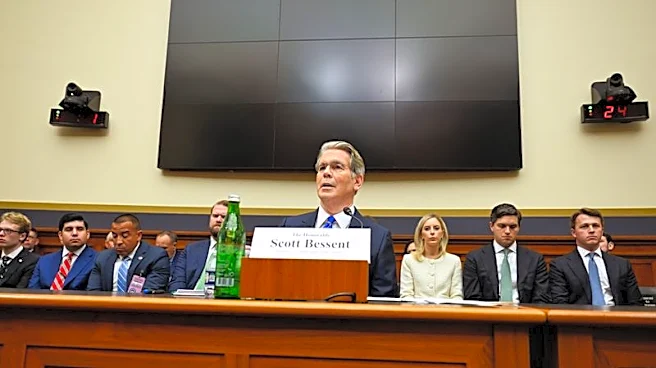
During a House Financial Services Committee hearing, Representative Maxine Waters (D-Calif.) engaged in a heated exchange with Treasury Secretary Scott Bessent regarding the Trump administration's approach to artificial intelligence (AI) policy. Waters expressed
significant concerns about the rapid development of AI and the perceived lack of regulatory safeguards, citing warnings from industry leaders such as Anthropic CEO Dario Amodei and Microsoft co-founder Bill Gates. She emphasized the potential risks associated with unchecked AI advancement and the necessity for caution and regulation. Secretary Bessent, however, dismissed these concerns, suggesting that AI developers have the autonomy to halt progress if they deem it necessary. The discussion highlighted a clear divergence in perspectives between the legislative and executive branches concerning the oversight and future direction of AI development in the U.S. The hearing itself was reportedly disrupted by protesters, underscoring the intense atmosphere surrounding various policy debates.
Why It's Important?
This clash between Representative Waters and Treasury Secretary Bessent is important because it underscores the growing tension and differing philosophies within U.S. politics regarding the regulation of emerging technologies, specifically artificial intelligence. The debate over AI safeguards has significant implications for national security, economic competitiveness, and societal well-being. Waters's insistence on caution and regulation reflects a concern that without proper oversight, AI could pose substantial risks, potentially leading to job displacement, ethical dilemmas, and even existential threats. Conversely, Bessent's stance, which appears to favor less government intervention and more industry self-regulation, suggests a focus on fostering innovation and maintaining a competitive edge in the global AI race. The outcome of this debate could shape future legislative efforts, influence investment in AI research and development, and determine the extent to which the U.S. government will intervene to mitigate potential harms from advanced AI systems. The involvement of prominent industry figures like Amodei and Gates further amplifies the urgency and gravity of these discussions, indicating that the private sector itself is divided on the optimal path forward.
What's Next?
The ongoing debate between lawmakers like Representative Waters and members of the Trump administration, such as Treasury Secretary Bessent, suggests that artificial intelligence policy will remain a contentious issue in the foreseeable future. We can anticipate continued calls for legislative action from congressional committees, potentially leading to the introduction of new bills aimed at regulating AI development and deployment. Industry leaders and advocacy groups are likely to intensify their lobbying efforts, attempting to influence the direction of these policies. The administration may continue to prioritize innovation and economic growth, potentially resisting stringent regulations that could be perceived as stifling technological advancement. Conversely, proponents of regulation will likely push for frameworks that address ethical concerns, data privacy, and the societal impact of AI. Future hearings and public discussions are probable, as stakeholders attempt to shape public opinion and policy. The outcome of these discussions will significantly impact the U.S.'s position in the global AI landscape, affecting both its technological leadership and its ability to manage the associated risks.
Beyond the Headlines
Beyond the immediate policy debate, the exchange between Representative Waters and Treasury Secretary Bessent highlights a deeper philosophical divide concerning the role of government in technological innovation. This isn't merely about AI; it's about the fundamental question of whether emerging technologies should be allowed to develop largely unfettered, driven by market forces, or if proactive governmental oversight is necessary to prevent unforeseen negative consequences. The ethical implications of AI, including algorithmic bias, autonomous decision-making, and the potential for widespread surveillance, are profound and touch upon core democratic values. The discussion also implicitly raises questions about the U.S.'s long-term strategic competitiveness against nations with different regulatory philosophies. If the U.S. adopts a highly restrictive approach, it risks falling behind in AI development, but a completely hands-off approach could lead to significant societal disruptions. This tension between innovation and regulation will likely define technological policy for decades, influencing not only economic growth but also the very fabric of society and the balance of power between corporations and the state.