
What's Happening?
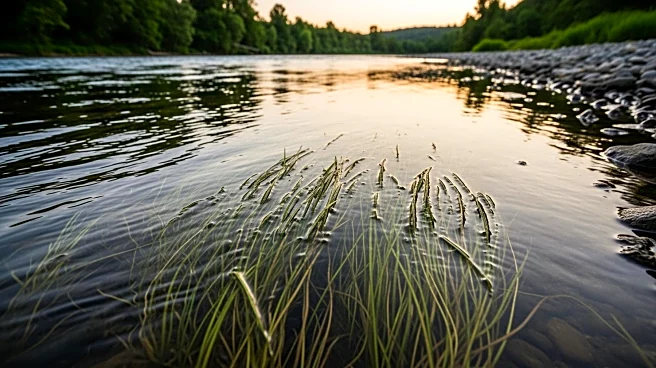
Durham Wildlife Trust has embarked on a seagrass restoration project in the rivers Aln and Don in North East England. This initiative, part of the Stronger Shores project, aims to reintroduce seagrass to areas
where it once thrived but has since diminished due to human activity and environmental changes. The trust, in collaboration with Tees Rivers Trust, planted seagrass seeds grown at a specialist nursery in Hartlepool. The project involves planting the seagrass in custom-made frames to protect the fragile plants and monitor environmental conditions. The trial, which will continue until September, seeks to determine the viability of re-establishing seagrass in these regions.
Why It's Important?
Seagrass plays a crucial role in marine ecosystems by capturing carbon, providing habitat for marine species, and improving water quality. The restoration of seagrass meadows could significantly enhance biodiversity and contribute to climate change mitigation efforts. This project not only aims to restore lost habitats but also serves as a model for similar conservation efforts globally. Successful re-establishment of seagrass could lead to improved coastal resilience against environmental changes and human impacts, benefiting both local ecosystems and communities.
What's Next?
The project will continue with further plantings, including a scheduled planting at the Wansbeck Estuary. Researchers will monitor the growth and survival of the seagrass, using environmental sensors to gather data on conditions affecting the plants. The outcomes of this trial will inform future restoration efforts and strategies for seagrass conservation. Continued collaboration with local and regional partners will be essential to the project's success and potential expansion.
Beyond the Headlines
The seagrass restoration project highlights the broader importance of ecosystem restoration in combating climate change and biodiversity loss. It underscores the need for innovative conservation strategies that work with nature to address environmental challenges. The project also raises awareness about the ecological and economic benefits of healthy marine ecosystems, potentially influencing policy and funding priorities in environmental conservation.