






What's Happening?
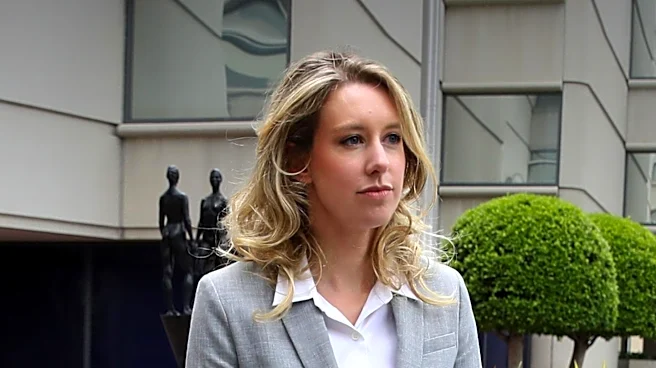
Filmmakers Nathan Fielder and Lance Oppenheim's A24 documentary, 'You Can See Everything,' offers a look into the 34 days Elizabeth Holmes, founder of Theranos, spent outside federal prison in 2023. The film, released on October 16, aims to present Holmes'
perspective and counter negative public portrayals following her conviction for defrauding Theranos investors. The documentary opens with Holmes' partner, Billy Evans, inviting the filmmakers into their San Diego County beach rental, with Holmes promising full transparency. However, the narrative quickly shifts to themes of deception and manipulation, prompting viewers to question the authenticity of Holmes, Evans, and even Fielder's own portrayal. The film humanizes Holmes by showing her as a mother navigating life with young children while preparing for incarceration, contrasting sharply with her public image as a tech visionary or the various negative labels she has received. Holmes maintains that she never lied and always believed in her device's capabilities, despite its proven failures.
Why It's Important?
The documentary is significant as it re-examines the narrative surrounding Elizabeth Holmes, a figure who became synonymous with Silicon Valley's unchecked ambition and fraud. By presenting a more personal, albeit potentially manipulated, view of Holmes, the film challenges public perception and the established media narrative that largely defined her downfall. This re-evaluation could influence public discourse on accountability in the tech industry and the complexities of media portrayal versus personal truth. The film's exploration of deception, not just by its subject but potentially by the filmmakers themselves, raises important questions about documentary ethics and the construction of reality in media. For true-crime enthusiasts and those interested in the Theranos saga, it offers a new lens through which to consider the motivations and self-perception of a convicted fraudster, potentially sparking renewed debate on her culpability and the broader implications for corporate governance and investor protection.
What's Next?
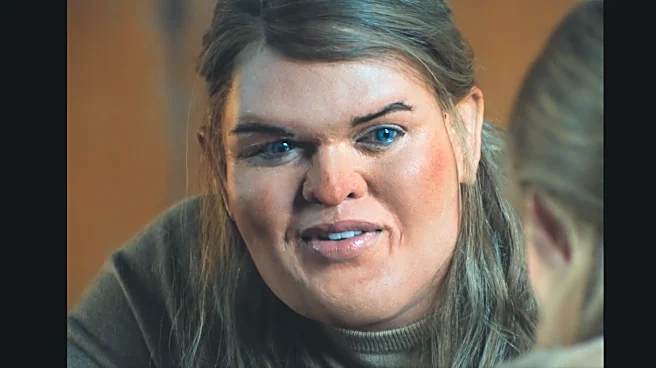
The documentary's release is likely to reignite public discussion and media analysis of Elizabeth Holmes' case, her persona, and the Theranos scandal. Viewers and critics will continue to dissect the film's portrayal of Holmes, Evans, and Fielder, debating the extent of manipulation and authenticity presented. The film's meta-narrative, including the involvement of actress Amanda Seyfried, who portrayed Holmes in 'The Dropout,' could lead to further discussions on the intersection of dramatization and documentary filmmaking. Given Holmes' continued belief in her vision and plans for 'Theranos 2.0' as revealed in the film, there may be ongoing public interest in her post-prison life and any future endeavors, though legal restrictions would likely prevent her from engaging in similar ventures. The film's ambiguous ending, leaving audiences to question what is 'real,' ensures its themes will resonate and be debated long after its initial release.
Beyond the Headlines
The documentary delves into deeper implications concerning truth, perception, and the power of narrative. It highlights the ethical tightrope walked by documentarians when subjects may be actively engaged in self-preservation or manipulation. The film implicitly questions the audience's role in discerning truth, especially when presented with carefully curated realities. Holmes' unwavering belief in her own 'truth,' despite overwhelming evidence to the contrary, touches on psychological aspects of self-deception and cognitive dissonance, which have broader societal implications in an era of misinformation. The film also subtly critiques the media's role in shaping public figures, showing how a persona can be constructed and deconstructed. The lingering question of who is manipulating whom—Holmes, Evans, or Fielder—serves as a powerful commentary on the subjective nature of reality and the challenges of objective storytelling, particularly when dealing with high-profile, controversial figures.