






What's Happening?
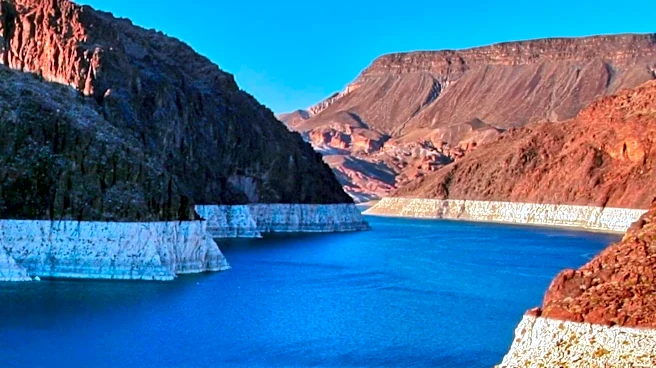
Hydropower generation in the Southwestern electricity supply region of the U.S. experienced a significant decline of 19% from April through August 2026 compared to the same period in 2025. The U.S. Energy Information Administration (EIA) reported this
on November 13, noting that the output was also 28% below the ten-year average for the region. This record-low summer generation is primarily attributed to a prolonged drought impacting the Colorado River Basin. The affected region encompasses Arizona, New Mexico, and smaller portions of Nevada and California. The EIA's figures specifically measure generation during the stated period and do not indicate a current electricity outage in the region.
Why It's Important?
The substantial decrease in hydropower output in the Southwestern U.S. highlights the growing vulnerability of the nation's energy infrastructure to climate-related challenges, particularly prolonged droughts. Hydropower is a crucial component of the energy mix in this region, providing a renewable and often flexible source of electricity. A sustained reduction in its availability can lead to increased reliance on other, potentially more expensive or carbon-intensive, energy sources, impacting electricity costs for consumers and businesses. Furthermore, the drought's effect on the Colorado River Basin underscores the broader environmental and economic pressures on water resources in the Western U.S., which are vital for agriculture, urban consumption, and energy production. This situation could accelerate the need for investment in alternative energy solutions and water conservation strategies to ensure regional stability and energy security.
What's Next?
The ongoing drought conditions and their impact on hydropower generation are likely to prompt further discussions and actions regarding water management and energy diversification in the Southwestern U.S. State and federal agencies may explore enhanced water conservation measures, re-evaluate water allocation policies, and accelerate investments in other renewable energy sources like solar and wind power to compensate for the reduced hydropower capacity. Utilities in the region may need to adjust their energy procurement strategies, potentially leading to higher operational costs that could be passed on to consumers. Additionally, the situation could spur innovation in drought-resistant energy technologies and infrastructure improvements aimed at enhancing grid resilience against climate impacts.
Beyond the Headlines
The decline in Southwestern hydropower output extends beyond immediate energy concerns, touching upon complex inter-state water rights, ecological impacts, and long-term climate adaptation strategies. The Colorado River Basin is a critical water source for millions of people and vast agricultural lands, making its depletion a multi-faceted crisis. This event could intensify political debates over water sharing agreements among basin states and between the U.S. and Mexico. Environmentally, reduced river flows threaten aquatic ecosystems and biodiversity. Culturally, indigenous communities with historical ties to the river face profound challenges. The situation serves as a stark reminder of the interconnectedness of water, energy, and environmental systems, pushing for a more integrated and sustainable approach to resource management in the face of a changing climate.