



What's Happening?
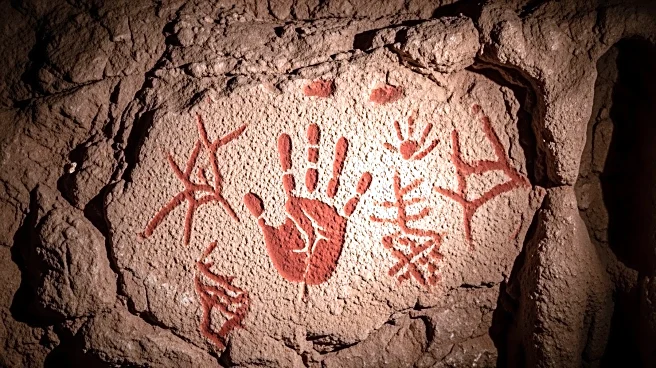
Researchers have discovered the world's oldest known example of cave art, dating back at least 67,800 years, in the Liang Metanduno limestone cave on Muna, an island in Indonesia. The art consists of reddish hand stencils, which were created by blowing
pigment onto a hand pressed against the rock surface. This discovery, made by Indonesian and Australian researchers, suggests that early humans in this region were creating art much earlier than previously thought. The findings challenge the long-held belief that sophisticated cave art originated in Europe, where Ice Age paintings are dated between 30,000 to 40,000 years old. The study, published in the journal Nature, highlights the complexity and antiquity of human artistic expression outside Europe.
Why It's Important?
This discovery significantly alters the timeline of human artistic development, suggesting that early humans in Southeast Asia were creating complex art tens of thousands of years before similar expressions appeared in Europe. It provides new insights into the migration and cultural evolution of early human populations, indicating that the ancestors of the first Australians might have been involved in these early artistic endeavors. The findings could lead to a reevaluation of the origins of human creativity and cultural expression, impacting our understanding of human history and the spread of modern humans across the globe.