




What's Happening?
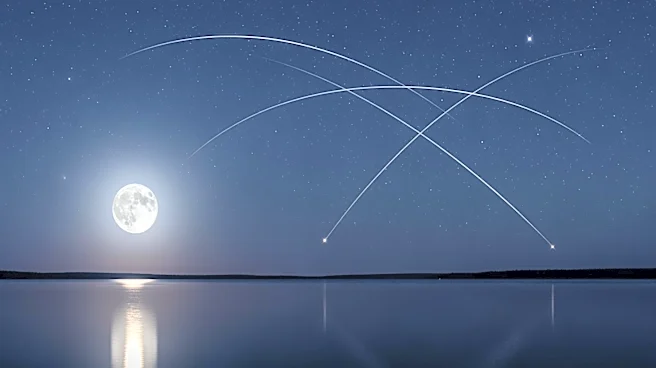
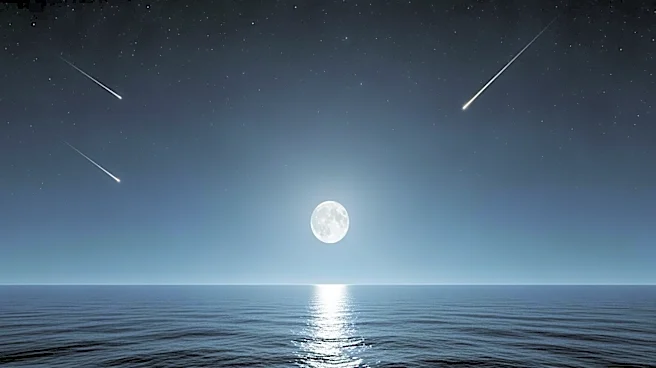
Venus, often referred to as the 'Evening Star,' is currently visible in the evening sky, glowing brighter than any star. Positioned east of the sun, Venus is reflecting sunlight back to Earth, making it the brightest planet in our solar system. This visibility
will increase as Venus climbs higher in the sky throughout the summer, reaching its peak brightness in mid-September. The planet follows a synodic cycle of approximately 584 days, alternating between its appearances as the 'Morning Star' and the 'Evening Star.' As it rises, Venus will transition through phases similar to the moon, from a bright, rounded glow to a crescent. By October, Venus will disappear into the sun's glare, reemerging as the 'Morning Star.'
Why It's Important?
The visibility of Venus as the 'Evening Star' offers a unique opportunity for both amateur and professional astronomers to observe one of the brightest celestial bodies in the sky. This event highlights the predictable nature of planetary movements and their impact on our night sky. For the general public, it provides an accessible way to engage with astronomy, fostering interest in space science and education. The cyclical nature of Venus's appearances also serves as a reminder of the intricate dynamics of our solar system, encouraging further exploration and understanding of planetary science.
What's Next?
As Venus continues to rise higher in the sky, it will become more visible and easier to spot after sunset. This increased visibility will last through the summer, culminating in its peak brightness in mid-September. Following this period, Venus will gradually move closer to the sun from Earth's perspective, eventually disappearing into the sun's glare by October. It will then transition to its 'Morning Star' phase, visible before sunrise in early 2027. This predictable cycle allows astronomers and enthusiasts to plan observations and educational events around these celestial phenomena.