







What's Happening?
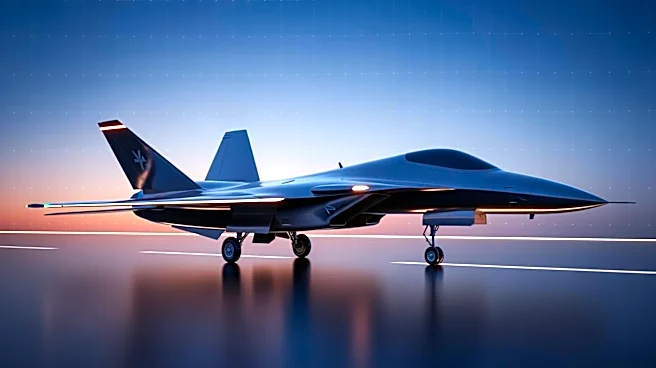
The Edgewing industrial consortium has been awarded the first governmental contract under the Global Combat Air Programme (GCAP), a trilateral initiative involving Italy, Japan, and the UK. Announced on April 2, 2026, the contract is valued at GBP686
million (USD907 million) and is intended to cover key design and engineering activities. This award marks a significant step in the development of a 'sixth-generation' combat aircraft, which is expected to be operational by the mid-2030s. The GCAP Agency, part of the GCAP International Government Organisation (GIGO), is coordinating this effort. The program aims to integrate unmanned 'loyal wingmen' and other adjuncts developed at a national level. The UK Ministry of Defence has expressed openness to future collaborations with other countries, with interest reportedly shown by Canada, India, Poland, and Saudi Arabia.
Why It's Important?
The awarding of this contract to Edgewing is a pivotal moment for the GCAP, as it consolidates efforts previously managed under separate national contracts into a unified international program. This development is crucial for advancing military capabilities and maintaining technological superiority in air combat. The collaboration between Italy, Japan, and the UK exemplifies a strategic partnership that could set a precedent for future international defense projects. The potential involvement of additional countries could further enhance the program's scope and impact, fostering global defense cooperation. The successful implementation of the GCAP could significantly influence the defense industry, potentially leading to advancements in aerospace technology and military strategy.
What's Next?
As the GCAP progresses, the focus will be on finalizing the full design and development contract. The program's success will depend on the effective collaboration between the participating nations and the potential inclusion of new partners. The interest from countries like Canada, India, Poland, and Saudi Arabia suggests that the program could expand, bringing in additional resources and expertise. The next steps will likely involve detailed negotiations and planning to integrate these potential partners into the program. The outcome of these efforts will be closely watched by the global defense community, as it could influence future international military collaborations.