

What's Happening?
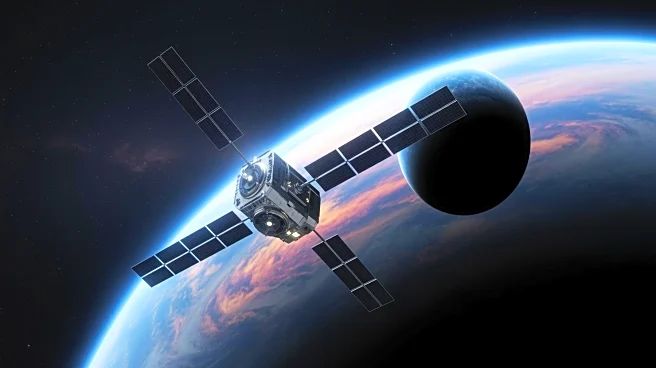
NASA has successfully launched the Pandora small satellite, an exoplanet observatory, from Vandenberg Space Force Base in California. The launch took place on January 11, 2026, aboard a SpaceX Falcon 9 rocket. Pandora is designed to study exoplanets,
which are planets outside our solar system, by analyzing their atmospheres. The mission aims to identify elements and compounds such as water vapor and clouds by observing the absorption of specific colors of starlight by atoms and molecules in the exoplanet's atmosphere. To achieve this, Pandora will monitor the brightness of target stars in visible wavelengths and collect near-infrared data from both the star and the transiting planet. This approach will help separate stellar noise from planetary signals, allowing for more accurate identification of atmospheric components. The mission is led by NASA's Goddard Space Flight Center, with contributions from Lawrence Livermore National Laboratory, Blue Canyon Technologies, and several universities.
Why It's Important?
The Pandora mission represents a significant advancement in the study of exoplanets, providing a deeper understanding of their atmospheres and potential habitability. By accurately identifying atmospheric components, scientists can better assess the conditions on these distant worlds, which is crucial for the search for life beyond Earth. The mission's ability to separate stellar noise from planetary signals addresses a major challenge in exoplanet research, potentially leading to more precise data and discoveries. This could have far-reaching implications for our understanding of planetary formation and the diversity of planetary systems in the universe. Additionally, the collaboration between various research institutions and NASA highlights the importance of interdisciplinary efforts in advancing space exploration and scientific knowledge.
What's Next?
Pandora will conduct repeated observations of selected exoplanet systems, capturing multiple transits and stellar variability patterns. This data will be used to model and subtract stellar behavior, allowing scientists to focus on the planetary signals. The mission's operations center at the University of Arizona will handle data processing, with ongoing contributions from the science team at various universities. NASA will continue to provide updates on Pandora's progress and findings through its official channels. The mission's success could pave the way for future exoplanet studies and missions, further expanding our understanding of the universe.