





What's Happening?
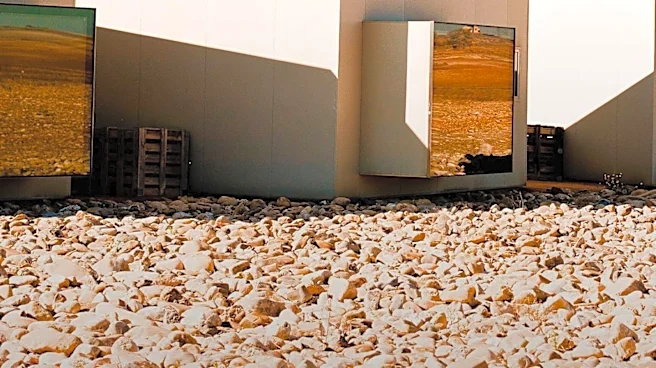
Donald Judd's architectural work in Marfa, Texas, is gaining renewed recognition, particularly for his pioneering approach to adaptive reuse. Beginning in 1973, Judd acquired numerous properties in Marfa, transforming them into living spaces, art installations,
and studios. His projects, including the Chinati Foundation and the Block, involved altering and repurposing existing structures rather than building new ones from scratch. This practice, once considered secondary in architecture, is now seen as highly relevant due to accelerating climate concerns and economic shifts. The Judd Foundation's Marfa Restoration Plan, initiated in 2018, continues to restore and maintain 26 buildings on which Judd worked. These efforts have also led to federal recognition, with National Register historic-district designations in 2022 and 2025 for central Marfa, Chinati, and the Block. His Architecture Office, a converted turn-of-the-century commercial storefront, opened to the public in September 2025, and a comprehensive restoration of the artillery sheds at Chinati began in Fall 2026.
Why It's Important?
Judd's work in Marfa highlights a significant shift in architectural practice towards adaptive reuse, moving it from a niche activity to a mainstream and ethically compelling approach. This trend is driven by environmental concerns and economic realities, making the reuse of existing buildings a persuasive business case. The recognition of Judd's work legitimizes this practice, offering a historical precedent for architects seeking to transform rather than demolish. His methodology, which prioritized 'use value' over market value, demonstrates how abandoned or marginal structures can be revitalized to create new forms of collective life and sustained practices. This approach has broader implications for urban planning and preservation, suggesting that entire districts of ordinary buildings can possess historical value and be adapted for new growth and uses, rather than being frozen in time or cleared for new construction. The ongoing restoration efforts in Marfa also contribute to the local economy and cultural landscape, attracting visitors and fostering a unique artistic environment.
What's Next?
The ongoing restoration efforts by the Judd Foundation and the Chinati Foundation will continue to preserve and open more of Donald Judd's architectural projects to the public. The comprehensive restoration of the artillery sheds at Chinati, which began in Fall 2026, is a key next step, aiming to restore the buildings and the one hundred aluminum works they contain. This continued preservation will further solidify Marfa's status as a significant cultural destination and a living testament to Judd's architectural philosophy. The increasing recognition of adaptive reuse as a critical architectural strategy suggests that more projects nationwide may adopt similar principles, potentially influencing future building codes, urban development policies, and funding for historical preservation. The example of Marfa could serve as a model for other communities looking to revitalize existing infrastructure in a sustainable and culturally rich manner.
Beyond the Headlines
Beyond its architectural significance, Judd's work in Marfa offers a profound commentary on the nature of institutions and the creation of enduring environments. His radical pragmatism, which involved working with existing conditions and allowing relationships to accumulate over time, challenges conventional notions of architectural authorship and permanence. Judd's integration of art, living, and working spaces within repurposed buildings suggests a model where institutions are not merely objects of critique but mediums for constructing new forms of social interaction. This approach emphasizes the importance of maintenance, adjustment, and ongoing use as fundamental parts of the work itself, rather than mere aftercare. In an era where cultural institutions are increasingly expected to serve diverse functions, Judd's legacy in Marfa provides a framework for creating durable structures that sustain collective life, highlighting the ethical and cultural dimensions of architectural practice beyond aesthetic considerations.