




What's Happening?
Rachel Maddow, a leading political commentator and host of "The Rachel Maddow Show" (TRMS), continues to be a central figure at MS NOW (formerly MSNBC) despite a significant network rebranding and internal restructuring in early 2025. Maddow's current
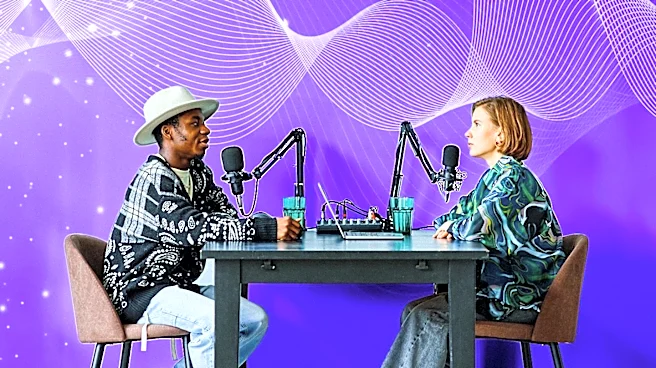
contract, renegotiated in late 2021 and signed in 2022, allows her to host TRMS weekly, typically on Mondays, while also serving as an Executive Producer for the show. This arrangement grants her substantial creative control and enables her to pursue other multimedia projects. A key development is the launch of her new exclusive podcast, 'Burn Order,' in December 2024, produced by NBC News Studios/MS NOW. This 8-episode investigative audio series focuses on the Japanese American incarceration during World War II, specifically the 'burn order' incident at the Tule Lake internment camp. The network's new Chairman, Rebecca Kutler, has publicly affirmed Maddow's status as the 'network's biggest star' and has notably preserved TRMS's entire senior production staff during widespread layoffs affecting other departments at MS NOW.
Why It's Important?
Rachel Maddow's sustained influence and unique contractual arrangement at MS NOW highlight a strategic shift in the media landscape, prioritizing established talent and multi-platform content. Her role as an Executive Producer and her ability to dictate the show's editorial direction underscore the value placed on her 'brand equity,' which includes a loyal audience, journalistic credibility, and agenda-setting capabilities. The launch of 'Burn Order' signifies MS NOW's commitment to intellectual property diversification and reaching younger, on-demand audiences through podcasts, which offer higher premium ad revenue and evergreen content. This move also allows Maddow to engage in deep-dive investigative journalism without the daily pressures of live television, retaining a key talent within the network. The decision to protect TRMS's production team during broader layoffs signals MS NOW's dedication to maintaining the show's distinctive quality and analytical depth, ensuring continuity and stability for a flagship program during a period of significant organizational change.
What's Next?
The continued evolution of Rachel Maddow's role at MS NOW suggests a future where prominent media personalities will increasingly operate as multi-platform brands rather than solely television hosts. The success of 'Burn Order' will likely influence MS NOW's strategy for developing more exclusive, long-form audio content, potentially leading to further investments in investigative podcasts and docuseries. The network's commitment to Maddow's unique 'historical storytelling' approach, as evidenced by the retention of her production team, indicates a focus on high-quality, evidence-based journalism. This could set a precedent for how other major news organizations manage their top talent and adapt to changing consumption habits, balancing traditional linear broadcasting with on-demand digital offerings. Future developments may include more cross-platform integration between TRMS and 'Burn Order,' and potentially other projects Maddow undertakes, further solidifying her position as a strategic content architect for MS NOW.
Beyond the Headlines
Rachel Maddow's career trajectory and her current standing at MS NOW reflect deeper trends in political media, particularly the increasing importance of individual journalistic brands and the shift towards a 'streaming-first' content strategy. Her academic background and 'historical storytelling' methodology distinguish her from many contemporaries, offering audiences a unique blend of deep analysis and narrative engagement. This approach fosters a more informed viewership by providing historical context and documentary evidence, moving beyond superficial news cycles. The network's decision to safeguard her team and invest in her podcast, even amidst widespread layoffs, underscores a recognition that certain journalistic integrity and analytical depth are invaluable assets in a fragmented media environment. This model suggests a future where media organizations may increasingly rely on established, credible voices to anchor their content offerings across various platforms, prioritizing substance and trust over fleeting viral trends, and potentially influencing how political discourse is shaped and consumed in the long term.