






What's Happening?
Taiwan has launched the World Alliance for Disaster Management (WADM) in Taipei, an initiative described by President Lai Ching-te as the first intergovernmental organization spearheaded by Taiwan in 55 years. This move comes as Taiwan continues its campaign
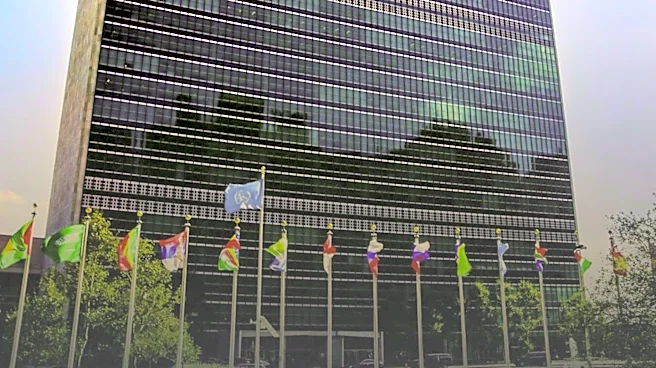
for greater participation in the United Nations, where Beijing holds a decisive procedural advantage. WADM's 13 founding members include Taiwan, 11 of its diplomatic allies, and Somaliland, while bodies from countries that do not recognize Taiwan join as observers or partners. The alliance aims to foster practical cooperation in disaster management, drawing on Taiwan's experience and expertise, particularly after the 1999 earthquake. This dual-track approach involves both traditional diplomatic efforts for UN inclusion and the creation of new platforms for international engagement, emphasizing resilience, preparedness, and stability.
Why It's Important?
The establishment of WADM is a significant development in Taiwan's soft power strategy, allowing it to build international partnerships and demonstrate its value as a global contributor despite its exclusion from many international organizations due to China's 'one-China' policy. By focusing on disaster management, Taiwan leverages its domestic reputation for effective disaster response into a form of cooperation that is less politically sensitive for non-allies. This strategy enables Taiwan to engage with a broader range of countries and agencies, fostering goodwill and practical ties without requiring them to alter their diplomatic recognition of China. For the U.S. and its allies, this initiative aligns with efforts to support Taiwan's meaningful participation in the international community and enhance regional resilience, particularly in areas like disaster preparedness, which are critical for global stability and humanitarian efforts. It also provides a mechanism for indirect engagement with Taiwan that circumvents direct diplomatic challenges with Beijing.
What's Next?
WADM is expected to expand its activities, focusing on joint training, exercises, operations, and information sharing in disaster management. The success of the alliance will be measured by the transition of observers to regular joint exercises and the establishment of sustained links between civil-protection agencies and Taiwan, particularly during periods of heightened cross-Strait tensions. Taiwan will likely continue to use such initiatives to highlight its capacity for international contribution and to counter Beijing's efforts to isolate it diplomatically. The U.S. and its partners may explore avenues to support WADM, potentially through technical assistance or by encouraging their own agencies to participate as observers or partners. However, the challenge remains in translating this practical cooperation into broader international recognition within the UN system, where China's influence is substantial. The ongoing contest over language in bilateral diplomacy, where Beijing often secures reaffirmations of the 'one-China principle,' will continue to limit Taiwan's formal diplomatic breakthroughs.
Beyond the Headlines
WADM's creation highlights a strategic shift in Taiwan's foreign policy, moving beyond traditional state-centric diplomacy to a more pragmatic, issue-based approach. By focusing on a universal concern like disaster management, Taiwan can project an image of a responsible global citizen and a valuable partner, rather than solely a contested political entity. This 'functional diplomacy' allows Taiwan to build relationships and gain international legitimacy through practical contributions, even without formal diplomatic recognition. The initiative also underscores the concept of 'resilience' as a key component of national security, encompassing not only military defense but also societal preparedness for various threats, including natural disasters. This approach could serve as a model for other non-state actors or entities facing similar diplomatic challenges, demonstrating how expertise and humanitarian efforts can be leveraged to enhance international standing and influence. The long-term impact could be a gradual normalization of Taiwan's presence in specialized international forums, even if full UN membership remains elusive.