





What's Happening?
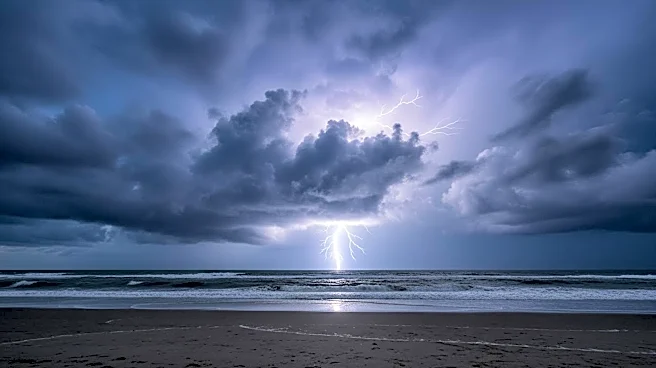
A tragic incident occurred in Florida over the July 4 weekend when a beachgoer was killed by a lightning strike. The victim, an unidentified male, was swimming at Fort Myers Beach when he was directly struck by lightning and died. Three other individuals
who were nearby in the ocean were injured and subsequently taken to a hospital. The Fort Myers Beach Fire District responded to the scene, where a bystander had already attempted to revive the victim using an Automated External Defibrillator (AED) and performing CPR, but the efforts were unsuccessful. The incident underscores Florida's status as a high-risk area for lightning strikes, particularly during the summer months. The National Lightning Detection Network identifies Florida as leading the nation in annual lightning strikes, with July being the most dangerous month. Officials continue to advise residents and visitors to seek shelter immediately when thunder is heard, emphasizing the unpredictability and reach of lightning.
Why It's Important?
This incident highlights the persistent danger of lightning strikes in Florida, a state known for its high frequency of such events. The tragic death serves as a stark reminder of the risks associated with outdoor activities during the peak thunderstorm season. The broader significance lies in public safety and awareness, as officials stress the importance of heeding weather warnings and taking immediate action to protect oneself. The economic impact is also notable, as Florida's tourism industry could be affected by perceptions of safety during peak tourist seasons. Additionally, the incident may prompt local authorities to enhance public safety measures and educational campaigns to mitigate future risks. The event underscores the need for increased public awareness and preparedness in regions prone to extreme weather conditions.
What's Next?
In response to this incident, it is likely that local authorities and weather agencies will intensify efforts to educate the public about lightning safety. This could include more frequent public service announcements and the implementation of advanced warning systems at popular tourist destinations. The Fort Myers Beach Fire District and other local agencies may also review and potentially update their emergency response protocols to better handle similar situations in the future. Additionally, there may be discussions at the state level regarding the allocation of resources for public safety campaigns and infrastructure improvements to protect residents and visitors from lightning-related incidents.