
What's Happening?
Harold's Park Wildland, a 509-acre nature reserve in Waltham Abbey, Essex, is undergoing a transformation aimed at enhancing biodiversity through 'soft engineering' techniques. The site, which has historically
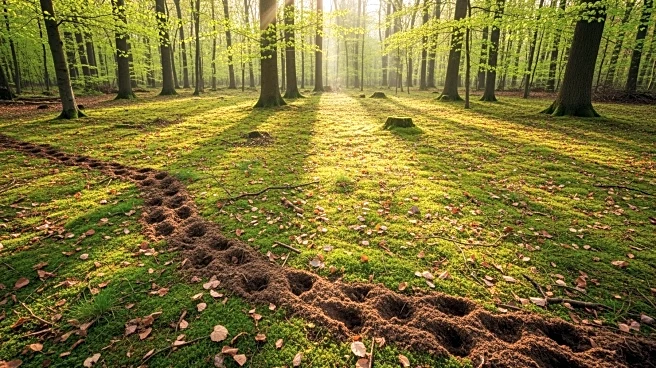
served as a royal hunting ground and unsuccessfully as arable farmland and a Christmas tree plantation, is now being revitalized with the help of three Iron Age pigs. These pigs, a cross between wild boar and Tamworth, are being used to turn over the soil, a process that will be complemented by the future introduction of cattle and ponies. This initiative is part of a broader effort by the site's owner, Nattergal, to restore natural processes and manage the deer population. The project also involves clearing conifer plantations to allow native saplings to grow, creating ponds, and implementing measures to reduce flooding. The site manager, Tom Moat, describes the effort as a 'light touch' re-wilding approach, aiming to let nature take its course.
Why It's Important?
The transformation of Harold's Park Wildland is significant as it represents a growing trend towards re-wilding and biodiversity enhancement in the UK. By using natural processes to manage environmental challenges, the project aims to restore the ecological balance and support rare species such as nightingales and turtle doves. This initiative not only contributes to local biodiversity but also serves as a model for sustainable land management practices. Additionally, the project is expected to alleviate visitor pressure on other natural sites in Essex, which have been experiencing high tourist numbers. The educational aspect of the project, which plans to open the reserve to children from urban areas, highlights the importance of connecting people with nature and fostering environmental awareness.
What's Next?
As the project progresses, the introduction of cattle and ponies will further aid in the restoration of natural processes at Harold's Park. The site is expected to evolve from fields into scrubland and wood pasture, providing a habitat for a variety of wildlife. The success of this project could encourage similar re-wilding efforts in other regions, promoting biodiversity and sustainable land use. The reserve's development will be closely monitored to assess its impact on local wildlife and visitor dynamics. The involvement of local authorities and nature partnerships suggests ongoing support and potential expansion of such initiatives.
Beyond the Headlines
The Harold's Park project underscores the potential of re-wilding as a tool for ecological restoration and climate resilience. By reintroducing natural processes, the initiative not only enhances biodiversity but also contributes to carbon sequestration and water management. The project's educational component could inspire future generations to value and protect natural environments. Moreover, the collaboration between private landowners, local authorities, and nature partnerships highlights the importance of multi-stakeholder approaches in addressing environmental challenges.