


What's Happening?
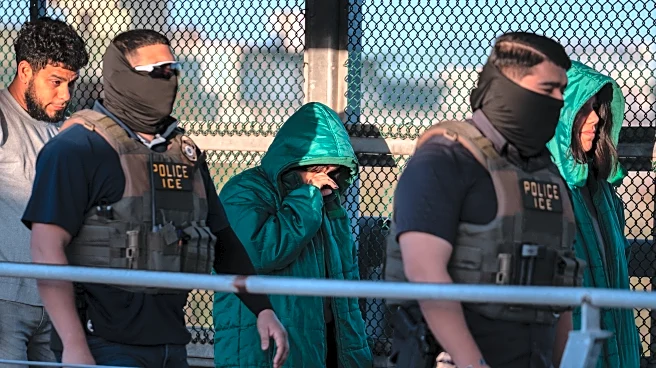
Edwin E. Chavez, an immigrant incarcerated at San Quentin Rehabilitation Center, expresses concerns about the consequences of parole due to potential deportation. Chavez, who has been in prison for 32 years, fears being transferred to Immigration and
Customs Enforcement (ICE) custody upon release, which could lead to deportation to El Salvador. This situation highlights the challenges faced by incarcerated immigrants who, despite rehabilitation, face uncertain futures due to immigration policies. Chavez's story underscores the tension between California's rehabilitation efforts and federal immigration enforcement.
Why It's Important?
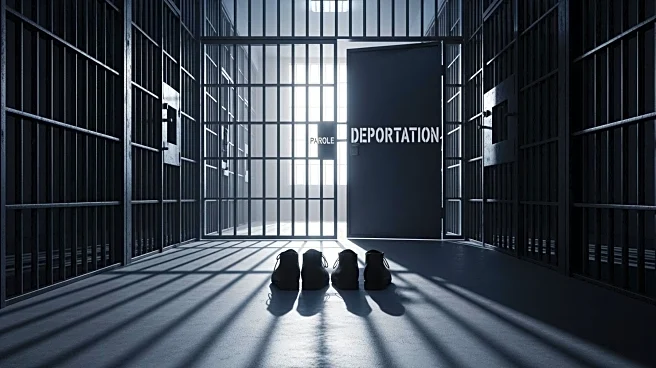
Chavez's predicament illustrates the complex intersection of criminal justice and immigration policy in the U.S. While California aims to rehabilitate inmates, federal immigration laws pose significant barriers for immigrants seeking reintegration into society. This issue affects not only individuals like Chavez but also broader discussions on immigration reform and criminal justice. The potential deportation of rehabilitated individuals raises ethical and legal questions about the balance between public safety and humane treatment of immigrants. It also highlights the need for policy coherence between state and federal levels.
Beyond the Headlines
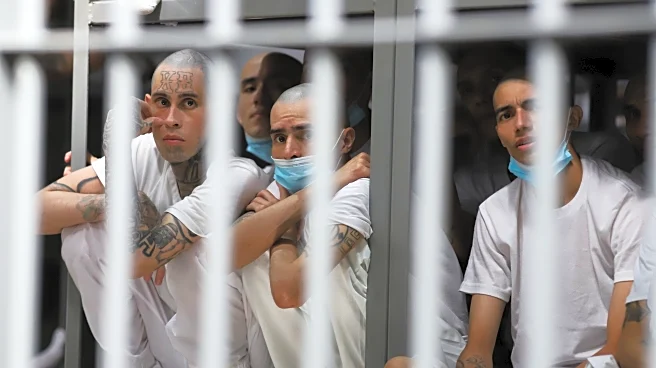
Chavez's story sheds light on the broader implications of immigration enforcement on rehabilitated individuals. The potential deportation to countries with harsh prison conditions raises human rights concerns. This situation calls for a reevaluation of policies that impact immigrants who have served their sentences and demonstrated rehabilitation. The narrative also prompts discussions on the role of restorative justice and the importance of providing second chances to those who have reformed. It challenges policymakers to consider the long-term impacts of deportation on individuals and their families.