








What's Happening?
A new study indicates that expanding Michigan's Great Lakes trail network could generate between $3.75 billion and $5 billion in annual economic benefits. The research, published in the journal *Eco-Tourism and Sustainable Development*, examined the potential
of the Great Lakes Way, a project designed to connect communities with natural resources and encourage tourism across Southeast Michigan and the broader Great Lakes region. Currently, the Great Lakes Way includes approximately 160 miles of greenways and 156 miles of water trails, with about 65% of the trail mileage being usable. The long-term vision aims to create an interconnected network stretching from Port Huron to Toledo, Ohio, linking existing trail systems and communities. This initiative evolved from a greenways project started over two decades ago, which faced funding challenges until the Community Foundation for Southeast Michigan raised $25 million in matching funds for grants. Key projects involved include the St. Clair County’s Bridge to Bay Trail, the Detroit Riverfront Conservancy’s Riverwalk, and the Joe Louis Greenway.
Why It's Important?
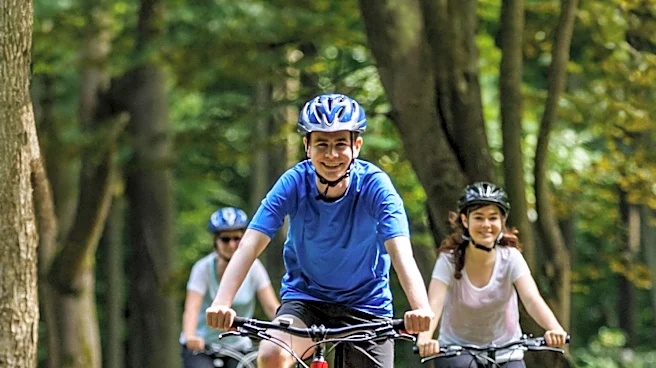
The potential economic impact of $3.75 billion to $5 billion annually highlights a significant opportunity for Michigan's economy, particularly through ecotourism. This expansion could benefit both urban and rural communities by attracting visitors, supporting local businesses, and enhancing the region's appeal as a place to live and work. The study's estimates represent potential economic benefits from an expanded trail tourism network, not current revenue. The development of high-quality infrastructure, as emphasized by Todd Scott, executive director of the Detroit Greenways Coalition, is crucial for maximizing these benefits. The project also has implications for cross-border tourism, especially with the opening of the Gordie Howe International Bridge, which connects Detroit and Windsor, Ontario, and includes a toll-free pathway for pedestrians and cyclists. This new connection has already shown immediate economic impact, with Canadian cyclists visiting Detroit and boosting local businesses.
What's Next?
The ongoing development and connection of various trail projects within the Great Lakes Way will be critical. While some water trails are considered complete in terms of planned routes, additional amenities like camping areas and restrooms are still needed along certain segments. Continued efforts to secure funding and ensure high-quality construction will be essential for the network to reach its full potential. There is also a broader discussion among the eight Great Lakes states about creating a larger trail system, potentially mirroring Canada’s Great Lakes Waterfront Trail, which would further expand the economic and recreational benefits. Addressing the uneven participation from some communities will be necessary to achieve a truly interconnected and comprehensive network that maximizes regional benefits.
Beyond the Headlines
The success of the Great Lakes Way project could serve as a model for other regions looking to leverage natural resources for economic development through ecotourism. It underscores the importance of long-term vision, sustained funding, and collaborative efforts between various stakeholders, including government agencies, non-profit organizations, and local communities. The project also highlights the evolving nature of tourism, with a growing emphasis on sustainable and nature-based experiences. Furthermore, the integration of cross-border infrastructure, like the Gordie Howe International Bridge, demonstrates how such developments can create new avenues for international tourism and economic exchange, fostering stronger regional ties and shared prosperity. The focus on quality construction and comprehensive amenities also points to a broader trend in infrastructure development that prioritizes user experience and long-term sustainability.