
What's Happening?
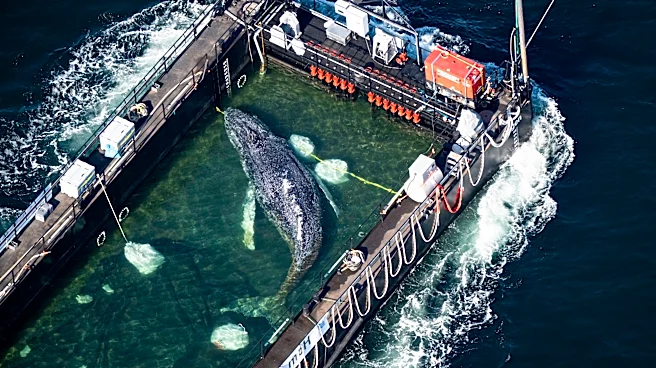
A humpback whale, nicknamed Timmy, stranded near Germany's Baltic Sea coast since March, is being transported to the North Sea. The whale, which had been in distress due to repeated strandings, was moved
onto a barge after efforts to guide it to deeper waters failed. The operation, unprecedented in Germany, involved creating a channel to facilitate the whale's movement onto the barge. The transport is part of a rescue mission approved by Till Backhaus, the minister for climate protection in Mecklenburg Vorpommern, despite concerns from some scientists about the whale's health. The whale's condition has been closely monitored, with recent vocalizations indicating it is stable.
Why It's Important?
The rescue operation for Timmy highlights the challenges and ethical considerations in wildlife conservation efforts. The decision to intervene in the whale's natural course of life has sparked debate among scientists and conservationists. While some argue that the whale should be allowed to die naturally, others believe in attempting to save it. This situation underscores the complexities involved in wildlife rescue operations, where human intervention can sometimes cause additional stress to the animal. The successful transport of Timmy could set a precedent for future rescue missions, influencing policies and practices in marine conservation.
What's Next?
The barge carrying Timmy is expected to navigate around Denmark's northern tip towards the North Sea. The success of this operation could lead to further discussions on the best practices for handling similar situations in the future. Conservationists and scientists will likely continue to debate the ethical implications of such interventions. Additionally, the outcome of this rescue mission may influence public opinion and policy decisions regarding wildlife conservation and the role of human intervention in natural processes.