



What's Happening?
The national electrical grid utilizes harmonic filters to ensure the cleanliness and stability of AC power, particularly after High Voltage Direct Current (HVDC) to Alternating Current (AC) conversion. Jordan Taylor, known as The Electric Brit, explained
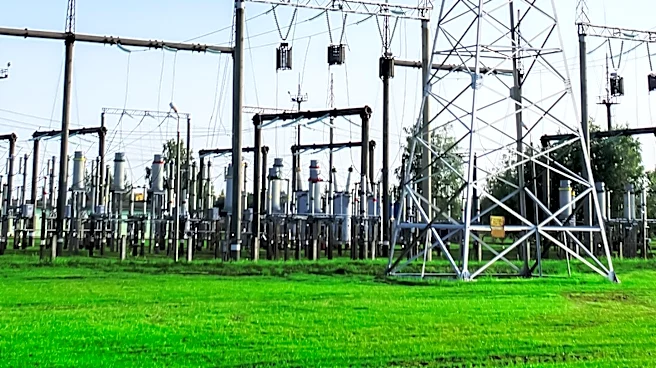
the function and necessity of these filters, using a UK-based line-commutated converter (LCC) HVDC converter station as an example. The conversion process introduces harmonics into the AC waveform, resulting in a noisy sinewave. This noise can potentially harm AC-powered devices and lead to heating and energy losses. Harmonic filters, which are essentially large-scale LC-filters, are deployed to scrub these harmonics, thereby maintaining a clean power supply. These filters also contribute to grid stability by absorbing and generating reactive power, which helps to dampen oscillations.
Why It's Important?
The proper functioning of harmonic filters is crucial for the reliability and efficiency of the U.S. electrical grid. A clean power supply prevents damage to sensitive electronic equipment used by industries and consumers, reducing maintenance costs and extending the lifespan of devices. The ability of these filters to manage reactive power and dampen grid oscillations is vital for maintaining grid stability, especially as the U.S. integrates more renewable energy sources that can introduce variability. Without effective harmonic filtering, the quality of power could degrade, leading to widespread disruptions, equipment failures, and increased operational costs for utility companies. This technology underpins the seamless operation of modern society, from industrial processes to household electricity, making it a critical component of national infrastructure.
What's Next?
As the U.S. continues to modernize its electrical infrastructure and integrate more HVDC transmission lines, the role of harmonic filters will become even more pronounced. Ongoing research and development in power electronics will likely focus on improving the efficiency and adaptability of these filters to handle increasingly complex grid dynamics. There may be a push for smarter, more responsive filtering systems that can dynamically adjust to changing grid conditions and power demands. Furthermore, as the nation moves towards a more decentralized energy system with distributed generation, the principles of harmonic filtering will need to be applied at various points across the grid, not just at large converter stations, to maintain overall power quality and stability.
Beyond the Headlines
The sophisticated engineering behind harmonic filters highlights the unseen complexities of maintaining a stable and reliable electrical grid. Beyond the immediate technical benefits, the continuous effort to 'clean' the power signal reflects a broader societal reliance on high-quality electricity for everything from critical infrastructure to personal devices. The discussion of harmonics also touches upon the subtle ways in which electrical phenomena can impact daily life and industrial operations, often without direct awareness from end-users. This intricate balance of power generation, transmission, and conditioning is a testament to the ongoing innovation required to support a technologically advanced society, emphasizing the critical importance of electrical engineering and infrastructure investment.