







What's Happening?
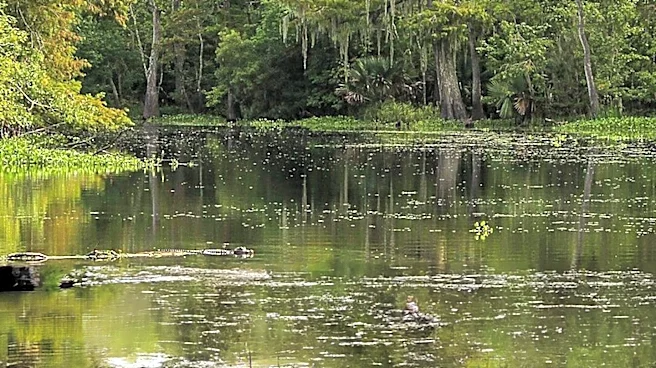
UNESCO has announced the addition of 25 new World Heritage sites during a meeting in Busan, South Korea. Among these, the Okefenokee National Wildlife Refuge, located in Georgia and Florida, is the only site from the United States to receive this recognition.
The refuge is noted for its rich biodiversity and its critical role in the larger ecosystem. Other notable sites include the D-Day Landing Beaches in Normandy, France, and Mount Olympus in Greece. The D-Day beaches are significant for their historical association with the Allied landings during World War II, while Mount Olympus is renowned for its mythological significance as the home of the twelve Olympian gods.
Why It's Important?
The inclusion of the Okefenokee National Wildlife Refuge as a World Heritage site underscores the importance of preserving natural habitats and biodiversity. This designation can enhance conservation efforts and attract global attention to the ecological significance of the area. For the U.S., it highlights the country's commitment to environmental preservation. The recognition of the D-Day beaches and Mount Olympus also emphasizes the importance of preserving sites of historical and cultural significance, which can foster international cooperation and tourism.