



What's Happening?
Governor Gretchen Whitmer has announced that local agencies across Michigan are receiving their initial payments from the Neighborhood Roads Fund. This fund is part of a substantial nearly $2 billion annual investment aimed at improving the state's infrastructure.
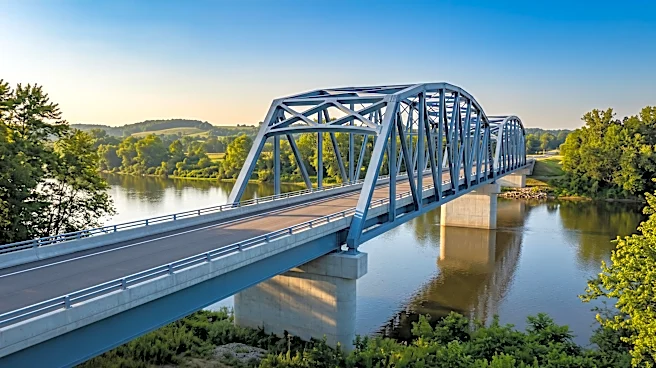
The allocated money will be directed towards several critical areas, including the repair and replacement of local bridges, support for public transit initiatives such as new projects and bus operations, and funding for rail grade separation projects. The distribution of these funds will benefit various cities, villages, and counties throughout Michigan. Specific counties in the TV5 viewing area, for instance, are set to receive significant amounts: Arenac County will get $427,799, Bay County $1,417,182, Genesee County $3,632,818, Isabella County $917,370, Midland County $1,033,540, Saginaw County $2,171,610, Shiawassee County $937,832, and Tuscola County $980,452. This initiative underscores the state's commitment to enhancing its transportation network and public services.
Why It's Important?
This announcement is significant for Michigan as it directly addresses the critical need for infrastructure improvements across the state. The nearly $2 billion annual investment, with initial payments now being distributed, will have a tangible impact on the daily lives of residents by improving road safety, reducing traffic congestion, and enhancing public transit options. For local economies, these infrastructure projects will likely create jobs in construction and related sectors, providing an economic boost to the recipient counties, cities, and villages. Businesses that rely on efficient transportation for logistics and supply chains will also benefit from better roads and bridges. Furthermore, the investment in public transit and rail grade separation projects aims to modernize Michigan's transportation system, making it more accessible and efficient for all citizens. This strategic allocation of funds reflects a broader commitment to long-term economic development and quality of life improvements within the state.
What's Next?
Following the initial distribution of payments from the Neighborhood Roads Fund, local agencies will proceed with planning and executing the various infrastructure projects. This will involve detailed project management for bridge repairs, public transit expansions, and rail grade separation initiatives. Residents can anticipate visible improvements in their local communities as construction and renovation efforts commence. The ongoing nature of this nearly $2 billion annual investment suggests that further payments and project announcements will follow, indicating a sustained effort by the state government to upgrade its infrastructure. Stakeholders, including local governments, construction companies, and public transit authorities, will be actively involved in implementing these projects, with a focus on timely completion and effective utilization of funds to achieve the stated goals of improved safety and efficiency.
Beyond the Headlines
Beyond the immediate benefits of improved infrastructure, this initiative by Governor Whitmer highlights a broader strategic vision for Michigan's future. Investing in roads, bridges, and public transit is not merely about maintenance; it's about laying the groundwork for sustained economic growth and enhancing the state's competitiveness. Modern and efficient infrastructure can attract new businesses, facilitate trade, and improve connectivity, which are crucial for a dynamic economy. The focus on rail grade separation projects, for instance, not only improves safety but also streamlines freight movement, benefiting industries that rely on rail transport. This long-term investment also signals a commitment to environmental sustainability by potentially reducing vehicle emissions through smoother traffic flow and increased public transit ridership. Ultimately, these infrastructure improvements contribute to a higher quality of life for Michigan residents, fostering community development and ensuring the state remains an attractive place to live and work.