








What's Happening?
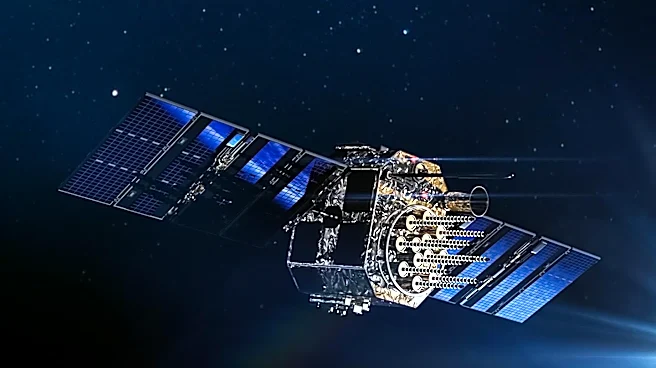
Western defense strategies are increasingly focused on satellite proliferation to enhance survivability against potential attacks. However, experts argue that this approach may not ensure operational resilience. The distinction between survivability and
resilience is crucial, as the latter involves maintaining functionality under sustained disruption. The reliance on fixed ground stations presents a vulnerability, as adversaries may target these instead of satellites. The need for autonomous mission management and interoperable allied systems is emphasized to enhance resilience and operational effectiveness.
Why It's Important?
The reliance on satellite proliferation as a defense strategy highlights a critical gap in ensuring operational resilience. The vulnerability of ground infrastructure poses a significant risk, as adversaries can exploit this to disrupt military operations. The emphasis on autonomous systems and allied interoperability reflects a shift towards more robust and adaptable defense architectures. This development is crucial for maintaining strategic advantages and ensuring the effectiveness of military operations in contested environments. The focus on resilience over sheer numbers may influence future defense policies and investments.
What's Next?
To address these challenges, Western defense establishments may prioritize the development of autonomous mission management systems and enhance interoperability among allied nations. This could involve establishing standards and agreements to facilitate seamless coordination and communication. The focus on resilience may lead to increased investments in technologies that enable satellites to operate independently of ground stations. As defense strategies evolve, stakeholders will likely engage in discussions to balance satellite proliferation with the need for resilient and adaptable systems.