



What's Happening?
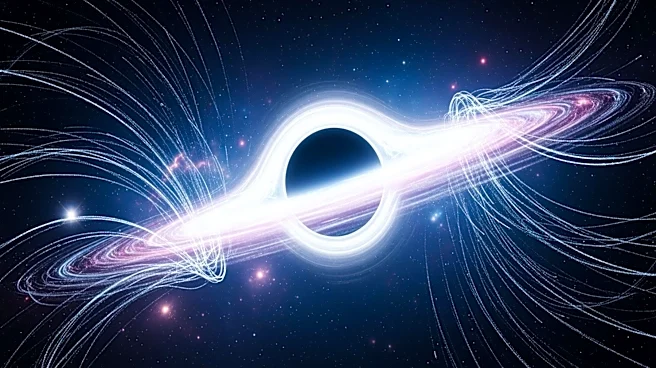
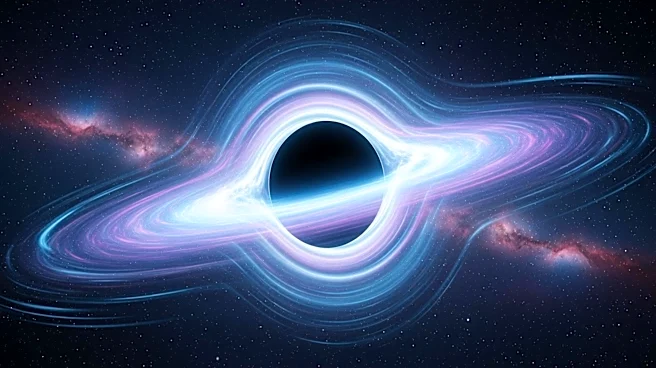
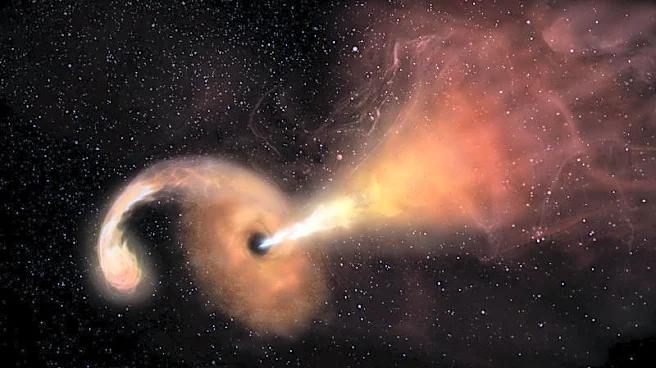
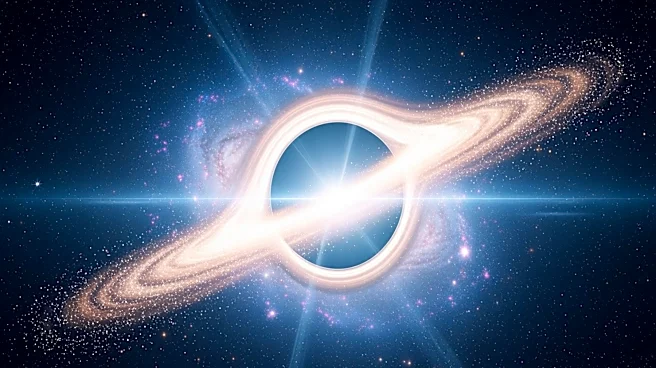
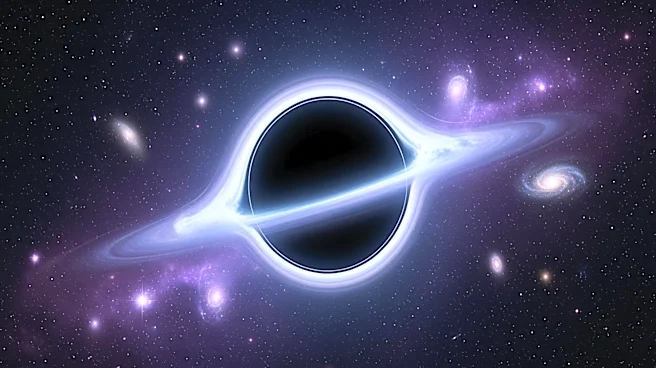
Astrophysicists at Northwestern University have confirmed the existence of a powerful wind emanating from Sagittarius A*, the supermassive black hole at the center of the Milky Way. This discovery resolves a 50-year-old mystery about the black hole's
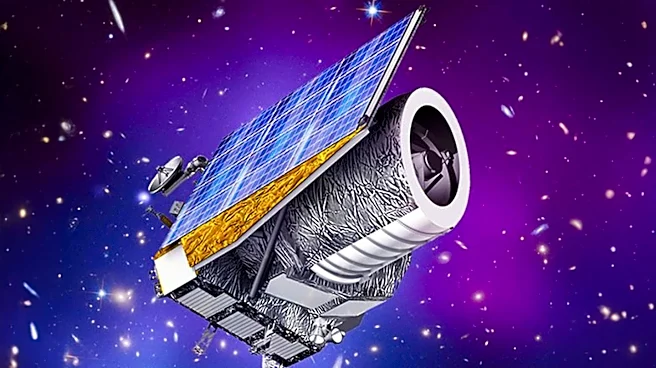
behavior. The research, published in The Astrophysical Journal Letters, reveals a giant cone-shaped cavity at the galaxy's center, providing evidence of an energetic wind. This wind is believed to have been active for at least 20,000 years, reshaping the surrounding environment. The findings were made possible through detailed observations using the Atacama Large Millimeter/submillimeter Array (ALMA) and NASA's Chandra X-ray Observatory.
Why It's Important?
The confirmation of a wind from Sagittarius A* offers new insights into the dynamics of black holes and their role in galaxy evolution. Understanding these winds is crucial for comprehending how black holes influence their surroundings, including star formation and the distribution of matter in galaxies. This discovery also challenges previous assumptions about the Milky Way's black hole, suggesting it is not as unique as once thought. The findings could lead to a reevaluation of theoretical models of black hole behavior and their impact on cosmic structures, enhancing our understanding of the universe.
What's Next?
Further research will likely focus on analyzing the wind's properties and its effects on the Milky Way's structure. Scientists may conduct additional observations to explore the wind's variability and its interaction with nearby stars and gas clouds. This discovery could also inspire new theoretical models to explain the mechanisms driving such winds in other galaxies. The study of Sagittarius A* may continue to provide valuable data for understanding the fundamental processes governing black holes and their influence on the cosmos.