






What's Happening?
The United States military has identified the remains of Private Joseph Gala, a soldier from the renowned 'Merrill's Marauders' unit, more than 80 years after he went missing during World War II. Gala, a 21-year-old from Lynn, Massachusetts, was declared
killed in action on July 14, 1944, two months after his disappearance during a mission in Burma (now Myanmar). He was last seen advancing with his battalion towards a heavily fortified Japanese position near Mankrin village. The 'Merrill's Marauders,' officially the 5307th Composite Unit (Provisional), was a volunteer infantry unit tasked by President Franklin D. Roosevelt with a 'secret and dangerous mission' in the China-Burma-India Theater. Approximately 3,000 men volunteered for this mission, with only about 200 returning home. Gala's unit successfully captured Burma's Myitkyina airstrip on May 17, 1944, after numerous battles against the Japanese army. His remains were initially buried in various U.S. military cemeteries in Burma and India before being transferred to the National Memorial Cemetery of the Pacific in Honolulu, Hawaii. The Defense POW/MIA Accounting Agency (DPAA) began exhuming unidentified remains from this cemetery in 2018, leading to the identification of Gala through dental and forensic tests, along with anthropological and circumstantial evidence.
Why It's Important?
The identification of Private Joseph Gala's remains underscores the U.S. military's ongoing commitment to accounting for service members lost in past conflicts, providing closure to families after decades of uncertainty. This effort highlights the advanced capabilities of modern forensic science in resolving historical mysteries. The 'Merrill's Marauders' unit holds a significant place in U.S. military history, known for its extraordinary endurance and effectiveness in extremely challenging jungle warfare conditions. Their mission in the China-Burma-India Theater, often referred to as the 'forgotten theater,' was crucial in disrupting Japanese supply lines and securing strategic locations. The unit's sacrifices and achievements, including each member being awarded the Bronze Star, serve as a testament to the bravery and resilience of American soldiers during World War II. This identification also brings renewed attention to the stories of these unsung heroes and the broader impact of the war on individual lives and families.
What's Next?
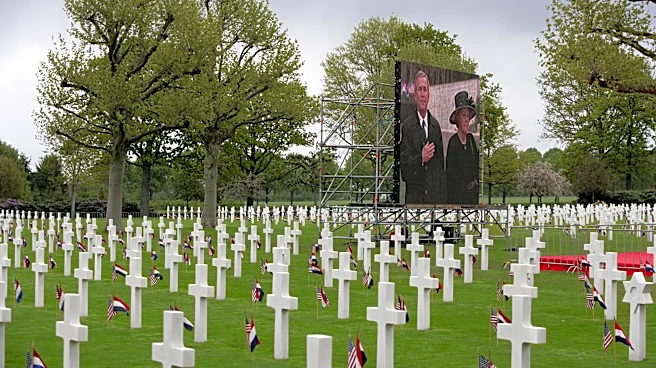
Private Joseph Gala will be buried in his hometown of Lynn, Massachusetts, on Thursday, providing his family with a long-awaited opportunity for a formal burial and remembrance. The DPAA will continue its efforts to identify other unidentified remains from past conflicts, particularly those from the Myitkyina campaign and other World War II battlefields. These ongoing identification projects often involve exhuming remains from national cemeteries and utilizing advanced scientific techniques. The agency's work ensures that more families receive answers regarding their loved ones who made the ultimate sacrifice. Furthermore, such identifications often lead to renewed interest in the historical context of these conflicts, potentially inspiring further research, documentaries, or educational initiatives about units like 'Merrill's Marauders' and the broader experiences of World War II veterans.
Beyond the Headlines
The identification of Private Gala's remains transcends a simple military record update; it represents a profound connection to a pivotal moment in American history and the enduring legacy of sacrifice. It highlights the psychological and emotional toll that unresolved disappearances take on families across generations, and the deep human need for closure. The story of 'Merrill's Marauders' itself is a powerful narrative of human endurance, strategic ingenuity, and the harsh realities of war, particularly in less-publicized theaters. This event also serves as a reminder of the continuous evolution of forensic science and its role in historical justice and remembrance. Ethically, the military's persistent efforts reflect a commitment to its personnel that extends far beyond active service, reinforcing the value placed on every individual's life and contribution, even decades after their passing. It also subtly reinforces the importance of maintaining detailed records and investing in scientific advancements for humanitarian purposes.