







What's Happening?
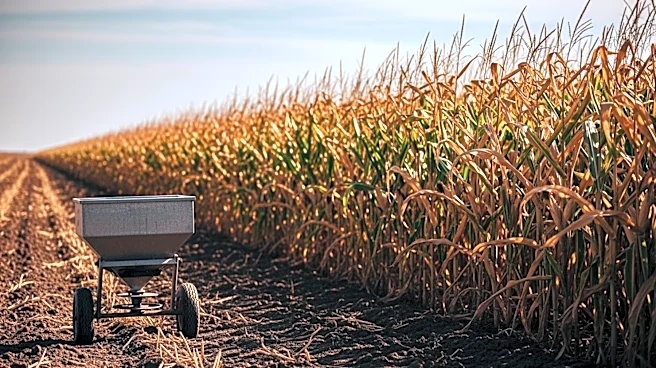
The National Corn Growers Association (NCGA) has released survey results indicating growing concerns among U.S. corn farmers regarding fertilizer affordability and access. The surveys, conducted in late March, reveal that while many farmers secured fertilizer supplies
for the 2026 crop, anxiety about pricing and availability is escalating, particularly for the 2027 crop year. The conflict in the Middle East, specifically the closure of the Strait of Hormuz, has intensified market stress, affecting fertilizer prices and availability. Retail fertilizer prices have risen, and affordability has deteriorated due to lower corn prices. Farmers are increasingly worried about whether fertilizer will be available when needed, as global shipping disruptions and curtailed production tighten supplies.
Why It's Important?
The rising concerns over fertilizer costs and availability have significant implications for the agricultural sector, particularly for corn farmers who rely heavily on these inputs. The increased costs and potential shortages could impact crop yields and profitability, affecting the overall stability of the agricultural industry. The geopolitical tensions in the Middle East further exacerbate these challenges, as disruptions in global trade can lead to supply chain issues and price volatility. The situation highlights the need for strategic planning and policy interventions to ensure farmers have access to affordable and reliable fertilizer supplies, which are crucial for maintaining agricultural productivity.
What's Next?
Farmers and industry stakeholders will likely continue to monitor the situation closely, advocating for policy measures to address the challenges posed by rising fertilizer costs and availability. The NCGA and other agricultural organizations may push for government intervention to stabilize prices and ensure supply chain resilience. As farmers begin securing inputs for the 2027 crop, the focus will be on mitigating risks associated with market volatility and geopolitical tensions. The industry may explore alternative sources and strategies to reduce dependency on affected regions and ensure long-term sustainability.