



What's Happening?
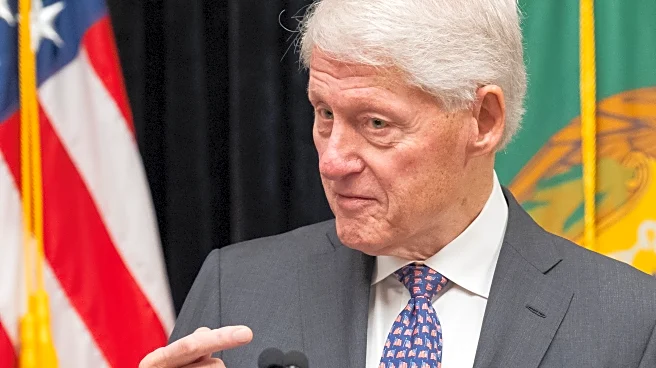
President Trump has directed all federal agencies, including the Defense Department, to immediately stop using technology from the AI firm Anthropic. This decision follows a disagreement between Anthropic and the Pentagon over the company's refusal to allow
its AI platform, Claude, to be used for mass surveillance or autonomous weapons. Despite the immediate cessation order, a six-month phase-out period has been granted for agencies currently using Anthropic's technology. The Pentagon had been utilizing Anthropic's AI in classified networks, but the company's stance on restricting access to its models led to the current conflict. Anthropic CEO Dario Amodei has defended the company's position, emphasizing the ethical implications of AI use in surveillance and weaponry.
Why It's Important?
This development highlights the ongoing tension between technology companies and government agencies over the ethical use of AI. The decision to cease using Anthropic's technology could impact the federal government's AI capabilities, particularly in defense and intelligence operations. It underscores the broader debate about the role of AI in national security and the ethical boundaries of its application. The move may also influence other tech companies' policies regarding government contracts and the ethical use of their technologies. The situation could lead to a reevaluation of how AI is integrated into government operations, potentially affecting future collaborations between tech firms and federal agencies.
What's Next?
The six-month phase-out period will require federal agencies to find alternative AI solutions, which could lead to increased competition among AI providers. The government may seek to develop or acquire new technologies that align with its security and ethical standards. Additionally, Anthropic's response to the phase-out and any potential legal actions could further shape the landscape of AI use in government. The situation may prompt other tech companies to reassess their policies and contracts with government entities, potentially leading to broader industry changes.