
What's Happening?
Researchers have uncovered how certain fungi can influence weather patterns by producing proteins that facilitate ice nucleation, a process that can lead to precipitation. The study, led by microbiologist
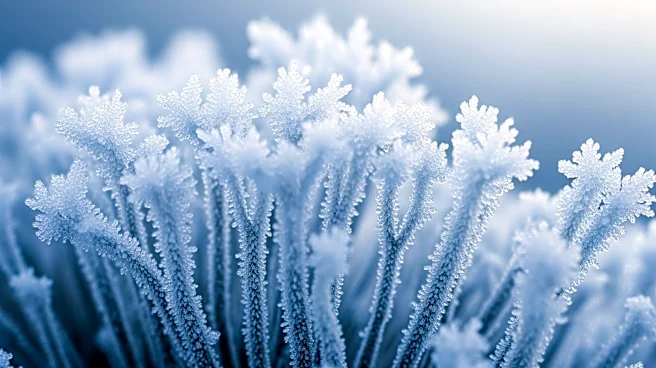
Boris Vinatzer at Virginia Tech, identified a gene in fungi from the Mortierellaceae family that is similar to a bacterial gene known for ice nucleation. This gene, acquired through horizontal gene transfer from bacteria millions of years ago, allows fungi to create ice crystals. These crystals can contribute to cloud formation and precipitation, potentially making fungi significant players in weather dynamics. The findings were published in the journal Science Advances.
Why It's Important?
The discovery of fungi's ability to influence weather has significant implications for understanding ecological systems and weather patterns. Fungi's role in cloud seeding could be more substantial than previously thought, potentially surpassing bacteria in importance. This could affect agricultural practices, water resource management, and climate models. Additionally, the study suggests a potential application for these proteins in cloud-seeding operations, offering a non-toxic alternative to silver iodide, which is currently used but poses environmental risks. This could lead to more sustainable practices in weather modification efforts.
What's Next?
Future research may focus on understanding the ecological advantages fungi gain from ice nucleation and how these proteins can be harnessed for human use. Scientists might explore the production of these proteins for commercial cloud-seeding applications, aiming to replace harmful chemicals with organic alternatives. Further studies could also investigate the broader impact of fungi on global weather patterns and their potential role in mitigating climate change effects.
Beyond the Headlines
The study highlights the complex interactions between different life forms and their environments, showcasing the intricate balance within ecosystems. The ability of fungi to influence weather patterns underscores the interconnectedness of biological and atmospheric processes. This discovery may prompt a reevaluation of fungi's ecological roles and their contributions to biodiversity and ecosystem services.