

What's Happening?
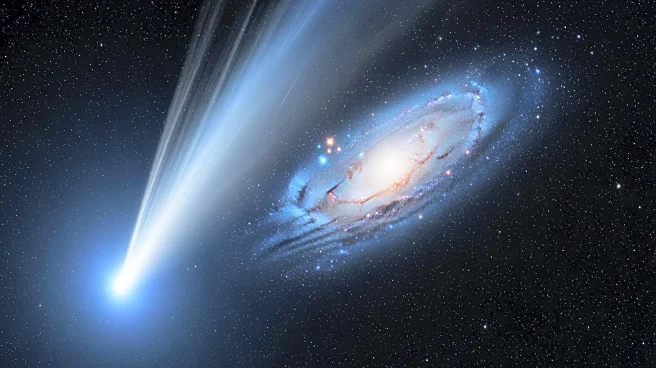
Comet Wierzchos (2024 E1) has been observed creating a visual spectacle for astronomers in the Southern Hemisphere. The comet, known for its multiple tails, was captured as it passed by the dwarf galaxy PGC 3589 in the Sculptor constellation on February
14. The image was taken by Gerald Rhemann from Farm Tivoli in Namibia using a 12-inch f/3.6 telescope. The exposure times for the LRGB (Luminance, Red, Green, Blue) images were 20, 9, 9, and 9 minutes, respectively. This event has been a highlight for binocular observers and astrophotographers in the region, showcasing the dynamic interactions between celestial bodies.
Why It's Important?
The observation of Comet Wierzchos alongside the dwarf galaxy PGC 3589 provides valuable data for astronomers studying the behavior and characteristics of comets. Such events offer insights into the composition and trajectory of comets, which are remnants from the early solar system. The ability to capture detailed images of these interactions helps enhance our understanding of cosmic phenomena and the structure of the universe. For amateur astronomers and the scientific community, these observations contribute to ongoing research and public interest in astronomy, fostering a deeper appreciation for space exploration and celestial events.