

What's Happening?
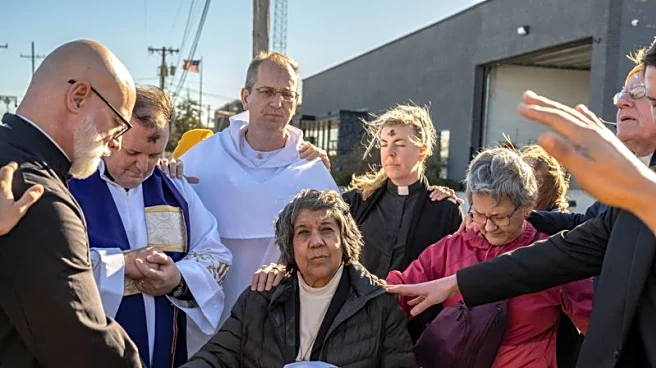
Religious leaders have been granted access to the Broadview ICE facility in Chicago to provide pastoral care on Ash Wednesday, following a court order. This decision comes after months of denied access due to the Trump administration's mass deportation
efforts, known as Operation Midway Blitz. The Coalition for Spiritual and Public Leadership, a Catholic advocacy group, filed a lawsuit against the federal government to regain access for religious services. U.S. District Judge Robert Gettleman issued a preliminary injunction allowing clergy to minister to detainees, citing that the government's actions had substantially burdened the exercise of religion. The court's decision also highlighted the inhumane conditions reported at the facility, prompting legal intervention to ensure detainees receive adequate care.
Why It's Important?
The court's ruling underscores the tension between immigration enforcement and religious freedom, highlighting the role of faith leaders in advocating for humane treatment of detainees. The decision is significant as it reaffirms the right to religious services for incarcerated individuals, a cornerstone of religious freedom in the U.S. This development may influence public policy and immigration enforcement practices, as it challenges the government's approach to handling detainees. The involvement of religious leaders in this issue reflects broader societal concerns about the treatment of immigrants and the ethical implications of current immigration policies. The ruling could set a precedent for future cases where religious rights intersect with government actions.
What's Next?
The Department of Homeland Security is expected to negotiate with the Coalition for Spiritual and Public Leadership to establish ongoing access for religious services at the Broadview facility. A status hearing is scheduled to discuss the continuation of religious ministry at the facility. This case may prompt further legal challenges and advocacy efforts from religious and civil rights groups, potentially influencing future immigration policies and practices. The outcome of these negotiations and hearings could impact how religious services are provided in detention facilities nationwide, shaping the balance between security concerns and religious freedoms.
Beyond the Headlines
This case highlights the broader ethical and cultural dimensions of immigration enforcement in the U.S. The involvement of religious leaders in advocating for detainees reflects a moral stance against perceived injustices in immigration policies. The court's decision may encourage other faith-based organizations to become more active in social justice issues, potentially leading to increased public awareness and advocacy. The case also raises questions about the role of religious institutions in political and social matters, as they navigate the complexities of supporting vulnerable populations while respecting legal frameworks.