




What's Happening?
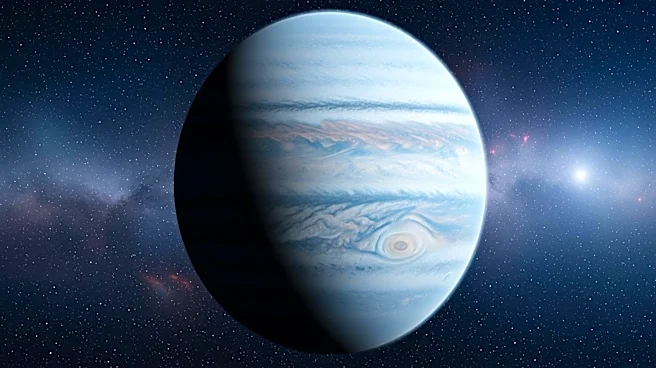
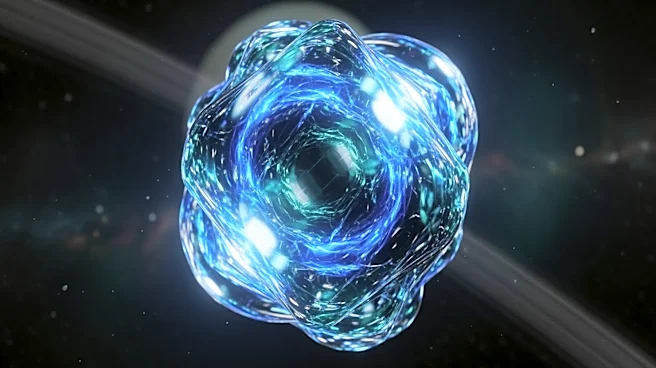
Researchers from the Carnegie Institution for Science have discovered a potential new state of matter within the interiors of Uranus and Neptune. Using advanced computer simulations, scientists Cong Liu and Ronald Cohen have identified a superionic state of carbon
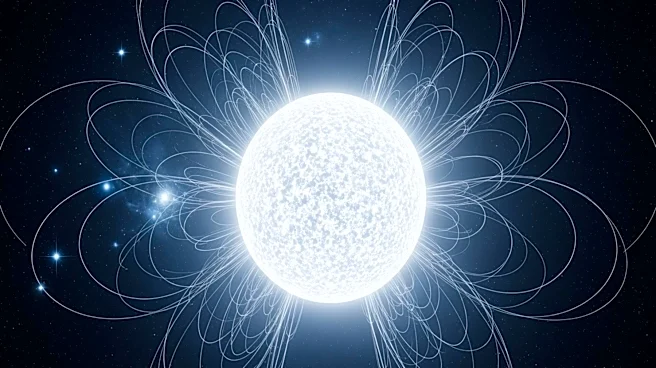
hydride under the extreme pressures and temperatures found deep within these ice giant planets. This state features a unique structure where hydrogen atoms move in spiral paths through a rigid carbon framework, creating a quasi-one-dimensional superionic state. This discovery could explain the unusual magnetic fields of Uranus and Neptune.
Why It's Important?
The discovery of a new state of matter within Uranus and Neptune has significant implications for our understanding of planetary science. It provides insights into the internal processes of these distant planets, which could help explain their unique magnetic fields. This research also highlights the complex behavior of simple elements like carbon and hydrogen under extreme conditions, which could have broader applications in materials science and engineering. Understanding these processes is crucial for assessing the potential habitability of exoplanets and advancing our knowledge of planetary formation and evolution.
Beyond the Headlines
The findings underscore the importance of interdisciplinary research in planetary science, combining observations, experiments, and theoretical models to uncover the physical processes shaping planets. This research not only enhances our understanding of our own solar system but also informs the study of exoplanets, potentially identifying worlds that could support life. The discovery of new states of matter under extreme conditions could lead to innovations in materials science, offering new possibilities for technological advancements.