







What's Happening?
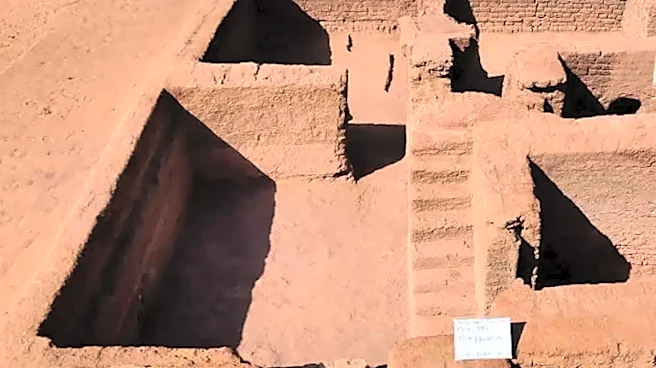
A genetic study has revealed that elite Scythians, including the famous 'Golden Man', inherited their status through family connections. The research, published in Science Advances, analyzed DNA from multiple burial sites, showing that Scythian elites
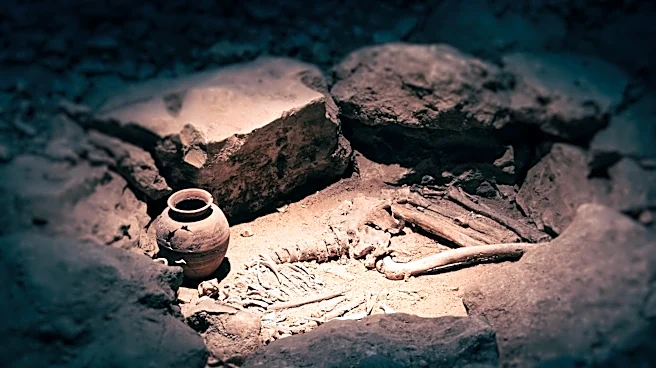
were related, indicating a lineage-based social structure. The study focused on the 'Golden Man', a Scythian youth buried with rich artifacts, whose DNA analysis confirmed he was likely male and part of the Saka subgroup. The findings suggest that social stratification among Scythians was more pronounced during the Iron Age compared to the Bronze Age, with elites maintaining continuity through genetic ties. The research also highlights the role of women in Scythian society, with many elite burials belonging to females, suggesting they held significant status.
Why It's Important?
The study provides crucial insights into the social dynamics of ancient nomadic societies, highlighting the emergence of dynastic rule among Scythians. Understanding how social status was inherited and maintained offers a deeper understanding of the cultural and political structures of the time. This research challenges previous assumptions about the egalitarian nature of nomadic groups, showing that social stratification was present and significant. The findings could influence how historians and archaeologists interpret the development of social hierarchies in ancient societies, offering a new perspective on the evolution of power and status. Additionally, the role of women in these societies, as indicated by the study, could lead to further exploration of gender dynamics in ancient cultures.