





What's Happening?
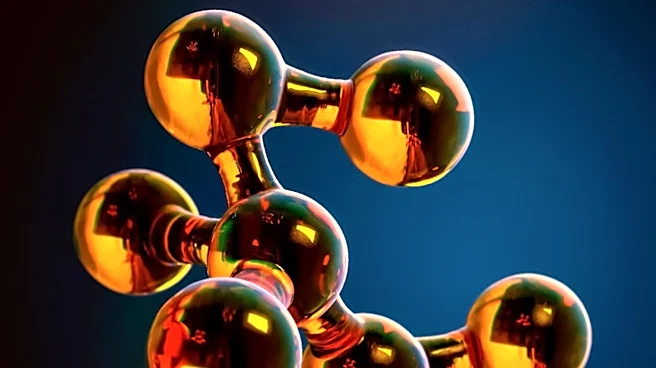
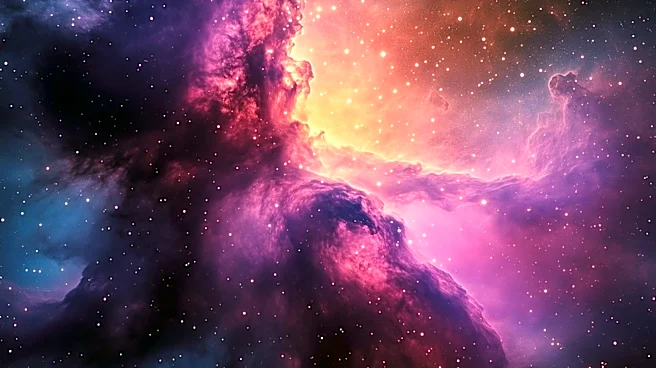
A recent astronomical study has identified the presence of erythrulose, a type of sugar, near the center of the Milky Way within a molecular cloud between star systems. This discovery, reported by Space.com and published in the journal Nature Astronomy,
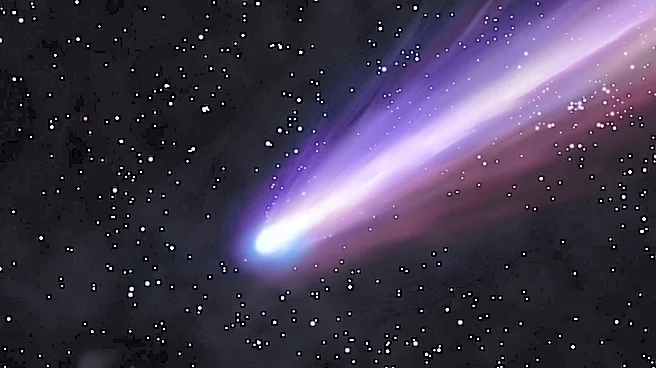
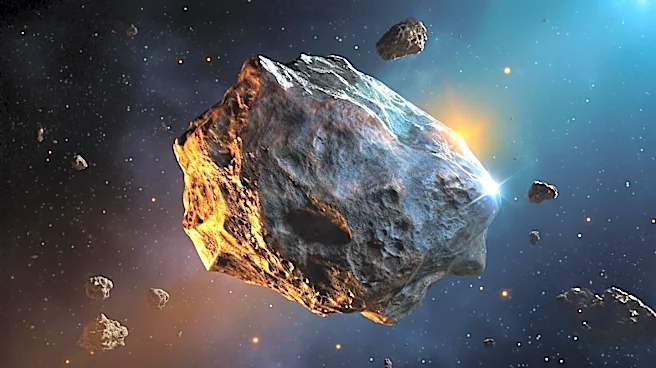
suggests that other sugars, such as ribose—a key component of RNA—and other molecules essential to the origin of life may also exist in space. The study, co-authored by Carlos Briones, highlights that erythrulose, like the brine found in meteorites, could provide significant clues to the origins of life. Erythrulose can transform into the building blocks of nucleic acids such as DNA and RNA. The presence of such sugars in massive molecular clouds of dust and gas could eventually lead to their incorporation into asteroids, comets, or other small celestial bodies. These bodies may later collide with planets, potentially sparking the emergence of life.
Why It's Important?
The detection of erythrulose in space is significant as it provides insights into the potential origins of life beyond Earth. The presence of sugars like erythrulose in molecular clouds suggests that the building blocks of life could be more widespread in the universe than previously thought. This discovery could have profound implications for our understanding of how life might arise on other planets. If these sugars are incorporated into celestial bodies that collide with planets, they could contribute to the chemical processes necessary for life to develop. This finding supports the theory that life's essential components could be distributed throughout the cosmos, potentially leading to the emergence of life in diverse environments.
What's Next?
Future research will likely focus on further exploring the presence of sugars and other organic molecules in space. Scientists may conduct additional studies to understand how these compounds form and their potential role in the development of life. Observations of other molecular clouds and celestial bodies could provide more evidence of life's building blocks in space. Additionally, missions to collect samples from asteroids and comets could offer direct evidence of these compounds, enhancing our understanding of their distribution and impact on planetary systems.
Beyond the Headlines
The discovery of erythrulose in space raises intriguing questions about the universality of life's building blocks. It challenges the notion that life's essential components are unique to Earth, suggesting instead that they might be common throughout the universe. This could lead to a paradigm shift in astrobiology, prompting scientists to reconsider the conditions necessary for life and the potential for its existence elsewhere. The study also highlights the importance of interdisciplinary research, combining astronomy, chemistry, and biology to explore fundamental questions about life's origins.