
What's Happening?
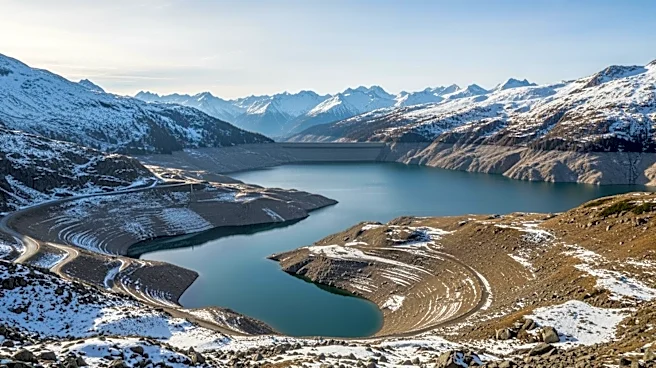
Europe is facing a significant challenge in its clean energy sector due to a winter with minimal snowfall. In Norway, the lack of snow has led to depleted water levels in reservoirs, which are crucial
for hydropower generation. This situation has resulted in reduced electricity exports to countries like the UK and Germany, causing a rise in electricity prices across the Nordic region. The hydrological deficit is affecting the region's ability to maintain its traditional price advantage in energy markets, leading to increased reliance on more expensive energy production methods.
Why It's Important?
The depletion of Europe's clean energy reservoir has significant implications for the region's energy security and economic stability. Hydropower is a key component of Europe's renewable energy strategy, and its reduction could lead to increased dependence on fossil fuels, impacting climate goals. The rise in electricity prices affects consumers and businesses, potentially leading to higher operational costs and reduced competitiveness. This situation underscores the vulnerability of energy systems to climate variability and the need for diversified energy sources.
What's Next?
The Nordic region faces the challenge of rebuilding its water reserves to stabilize hydropower generation. This may require long-term changes in weather patterns, as short-term precipitation is unlikely to suffice. Energy companies may need to explore alternative strategies to mitigate the impact of reduced hydropower, such as investing in other renewable sources or enhancing energy efficiency. Policymakers may need to address the economic and environmental implications of this energy shortfall, potentially leading to shifts in energy policy and investment priorities.