



What's Happening?
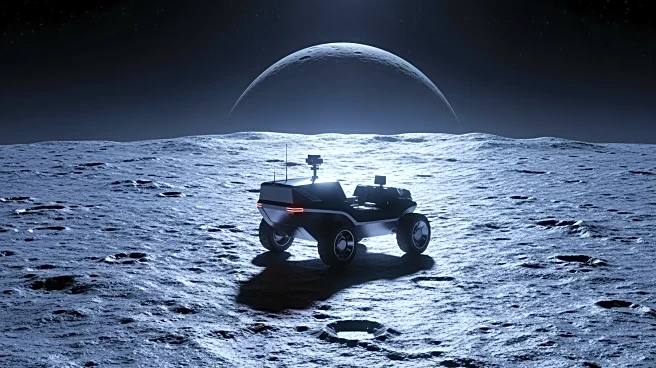
China is preparing to launch the Chang'e 7 mission later this year, targeting the lunar south pole to search for water ice. The mission will include an orbiter, lander, rover, and a water-seeking lunar hopper. Chang'e 7 is part of China's broader plan
to establish the International Lunar Research Station (ILRS) in collaboration with Russia and other countries. The mission aims to conduct remote sensing and on-the-spot investigations of water ice, which is crucial for future lunar exploration and potential human habitation.
Why It's Important?
The Chang'e 7 mission represents a significant step in China's lunar exploration program and its ambitions to establish a permanent presence on the Moon. By targeting the lunar south pole, the mission seeks to uncover valuable resources like water ice, which could support long-term human missions and serve as a resource for fuel and life support. The mission's success could position China as a leader in lunar exploration and pave the way for international collaboration in space research. The findings from Chang'e 7 will contribute to our understanding of the Moon's resources and its potential for supporting human life.
What's Next?
Following the Chang'e 7 mission, China plans to launch Chang'e 8 in 2028 to test technologies for building lunar habitats. These missions are part of China's strategy to achieve a crewed lunar landing by 2030 and establish the ILRS. The research station will enable long-term unmanned exploration and accommodate short-term human presence. As China advances its lunar exploration efforts, it will likely continue to collaborate with international partners, fostering global cooperation in space exploration and scientific research.