
What's Happening?
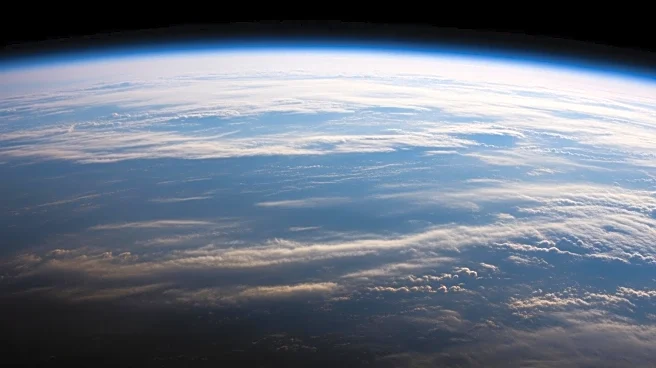
NASA has reported that the International Space Station (ISS) detected a previously unknown atmospheric phenomenon during Hurricane Helene's impact on the Florida coast. This event, identified as 'atmospheric
waves,' occurred approximately 55 miles above the Earth's surface in the mesosphere, a layer of the atmosphere that can be influenced by severe weather conditions below. The Atmospheric Wave Instrument (AWE) on the ISS captured these waves, which are not visible from the ground, revealing how hurricanes can affect atmospheric conditions at high altitudes. The Advanced Mesospheric Temperature Mapper (AMTM) played a crucial role in observing these waves, which are significant for understanding the interactions between surface weather and the upper atmosphere.
Why It's Important?
The detection of atmospheric waves by the ISS highlights the interconnectedness of Earth's weather systems and the upper atmosphere. This discovery is crucial for satellite operations, as changes in atmospheric conditions can affect satellite stability and performance. Understanding these waves can help predict and mitigate potential disruptions to communication and navigation systems that rely on stable atmospheric conditions. The findings provide valuable insights into how surface weather events, like hurricanes, can influence atmospheric dynamics, which is essential for improving weather forecasting and satellite safety.
What's Next?
With the initial observations from the AWE and AMTM, NASA plans to continue monitoring atmospheric waves during various weather events. This ongoing research aims to enhance the understanding of atmospheric dynamics and their impact on satellite operations. Future data collection will help refine predictive models, potentially leading to more accurate weather forecasts and improved satellite management strategies. As researchers gather more information, they hope to develop better tools for maintaining communication networks and ensuring satellite safety in the face of severe weather conditions.
Beyond the Headlines
The discovery of atmospheric waves extends the understanding of Earth's atmospheric processes, offering a new perspective on how surface weather can influence the mesosphere. This research underscores the importance of monitoring atmospheric conditions at high altitudes, which can have far-reaching implications for technology and communication systems. The ability to detect and analyze these waves opens new avenues for studying the Earth's climate system and its interactions with space weather, contributing to a more comprehensive understanding of global atmospheric dynamics.