





What's Happening?
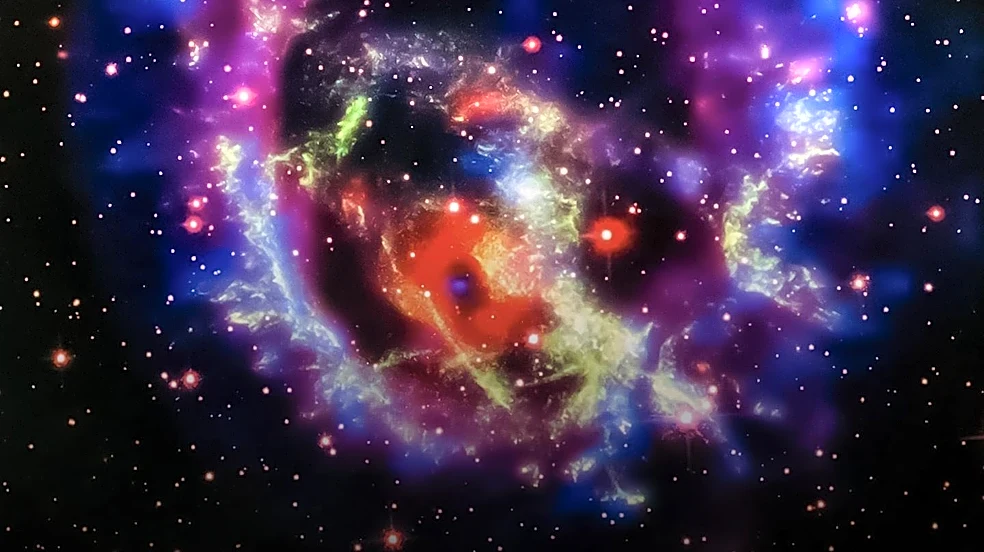
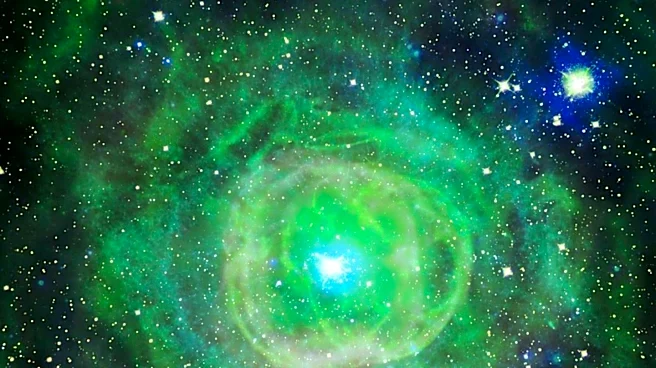
New observations of Pa 30, the remnant of the supernova SN 1181 witnessed by medieval astronomers, have revealed unexpected knot-like structures within its filaments. The Gemini North telescope in Hawaii captured images showing that the spectacular firework-like
filaments are not smooth streams but rather chains of tiny gas knots. SN 1181 was visible to the naked eye in the constellation Cassiopeia for 185 days in 1181, as recorded by Chinese and Japanese astronomers. This detailed imaging provides about ten times more filamentary structures than previously observed, offering fresh clues about the unusual explosion and the surrounding environment. Timothy Cunningham, an assistant professor of astronomy and astrophysics at the University of Warwick, led the international team that published these findings in The Astrophysical Journal.
Why It's Important?
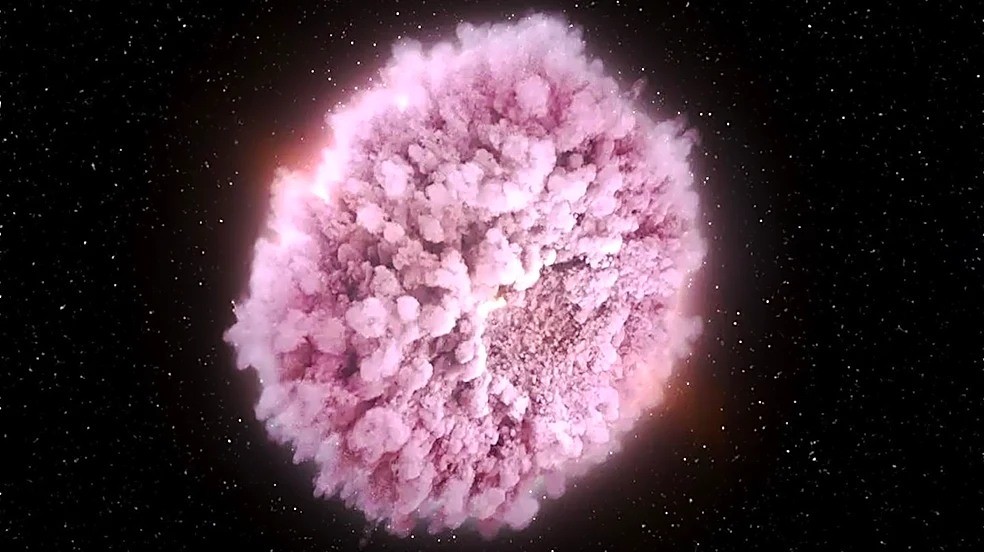
The detailed imaging of Pa 30 is significant because it provides unprecedented insights into the aftermath of a supernova that can be precisely dated. SN 1181 is one of only five supernovas in the Milky Way observed from Earth before the invention of the telescope, making its remnant a crucial historical and scientific artifact. The discovery of knot-like structures, rather than smooth filaments, challenges existing models of supernova ejecta expansion and interaction with the interstellar medium. This new information helps astronomers refine their understanding of the physical processes that shape supernova remnants and the conditions of the space around a star before it explodes. Such findings contribute to a broader understanding of stellar evolution, the life cycles of stars, and the distribution of elements in the universe, which are fundamental to astrophysics.
What's Next?
Researchers will likely conduct further analysis of the knot-like structures within Pa 30 to determine their precise composition, temperature, and density variations. This will involve using advanced spectroscopic techniques and potentially observations from other telescopes to gather more data across different wavelengths. The team will aim to develop more refined theoretical models that can account for the formation of these knots, which could lead to a better understanding of the dynamics of Type Iax supernovas. Future studies may also focus on the surviving central star within Pa 30, which is unusual for a supernova remnant, to understand its role in the explosion and its current state. The findings could also prompt re-examination of other supernova remnants for similar knot-like features, potentially leading to a broader re-evaluation of supernova physics.
Beyond the Headlines
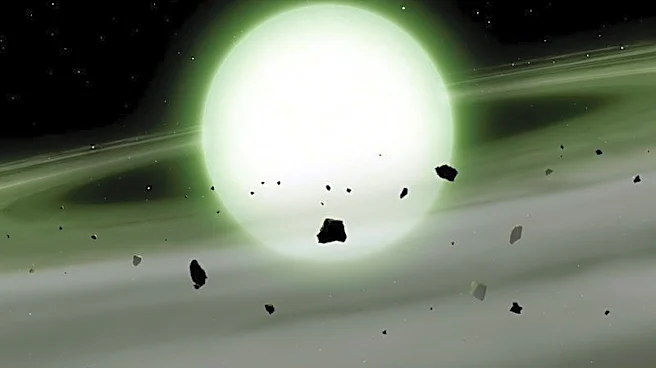
The study of Pa 30 bridges historical astronomical records with cutting-edge modern observational technology, highlighting the continuity of scientific inquiry across centuries. The ability to precisely date this supernova to medieval observations provides a unique anchor point for understanding cosmic evolution over long timescales. The unexpected knot-like structures underscore the complexity of astrophysical phenomena and the limitations of current theoretical models, pushing scientists to innovate and refine their understanding of the universe. Furthermore, Pa 30 is thought to be a Type Iax supernova, a less energetic and incomplete explosion of a white dwarf that can leave behind a 'zombie star.' This rare classification makes the remnant a critical case study for understanding these unusual stellar death events, which differ significantly from more common supernova types and contribute uniquely to the chemical enrichment of galaxies. The ongoing mysteries within Pa 30 serve as a reminder of the vast unknowns that still exist in space.