







What's Happening?
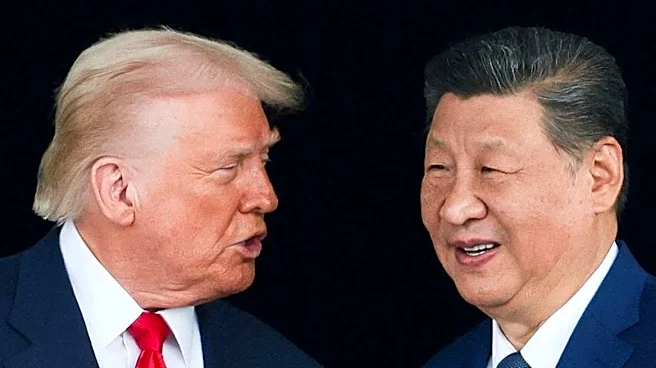
The latest round of peace talks between the United States and Iran is facing significant hurdles, with uncertainty over Iran's participation. Internal power struggles within Iran, led by hard-line factions, are complicating negotiations. President Trump
has expressed a desire to end the conflict peacefully, provided Iran offers guarantees to cease nuclear activities. However, the hardliners in Tehran are likely to veto any concessions, making meaningful negotiations difficult.
Why It's Important?
The peace talks are crucial for regional stability and could have significant implications for global security and economic markets. A successful negotiation could lead to the lifting of sanctions and a reduction in military tensions, benefiting both countries economically. However, failure to reach an agreement could result in renewed hostilities, impacting global oil prices and increasing geopolitical risks. The situation also tests the diplomatic strategies of the U.S. and its ability to influence outcomes in the Middle East.
What's Next?
The United States and Israel have a limited window to resume military actions if Iran does not provide verifiable concessions. The Pentagon is preparing options for further military interventions, which could escalate the conflict. The international community is closely monitoring the situation, as any escalation could have widespread consequences. The outcome of these talks will likely influence future diplomatic and military strategies in the region.