



What's Happening?
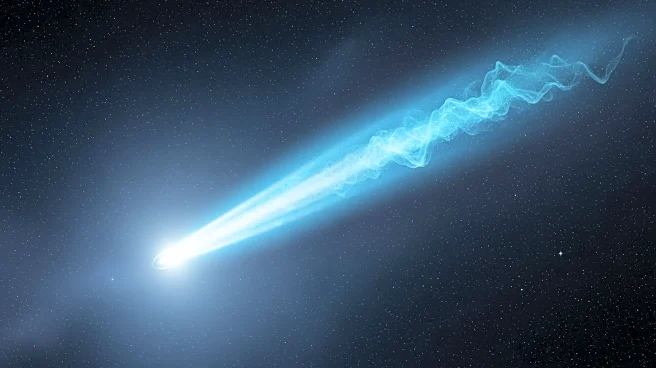
Harvard scientist Avi Loeb has raised concerns about the potential for cyanide from the interstellar comet 3I/ATLAS to reach Earth. The comet, which made its closest approach to Earth on December 19, 2025, was observed to contain hydrogen cyanide, a toxic
gas. Loeb speculated on the possibility of this gas reaching Earth, but concluded that solar winds would likely prevent any harmful material from impacting the planet. Observations from the Atacama Large Millimeter/Submillimeter Array in Chile detected methanol and hydrogen cyanide in the comet, prompting Loeb to describe it as a potential 'serial killer spreading poison.' However, due to the comet's distance and the effects of solar radiation, any debris is expected to burn up in the atmosphere or be swept away.
Why It's Important?
The potential threat posed by 3I/ATLAS highlights the importance of monitoring interstellar objects for hazardous materials. While the immediate risk to Earth is minimal, the presence of toxic substances like hydrogen cyanide in comets raises questions about the potential for future impacts. This situation underscores the need for continued investment in space observation technologies and international cooperation in space monitoring. Understanding the composition and behavior of such celestial bodies is crucial for assessing potential threats and developing strategies to mitigate them.
What's Next?
As 3I/ATLAS continues its journey through the solar system, scientists will likely continue to monitor its trajectory and composition. The comet is expected to reach Jupiter by March 16, 2026, where it may provide further opportunities for study. Researchers will be particularly interested in any changes in the comet's behavior or composition as it interacts with the gas giant. Additionally, Loeb's theories about the comet's potential artificial origins may prompt further investigation into the possibility of extraterrestrial technology.