




What's Happening?
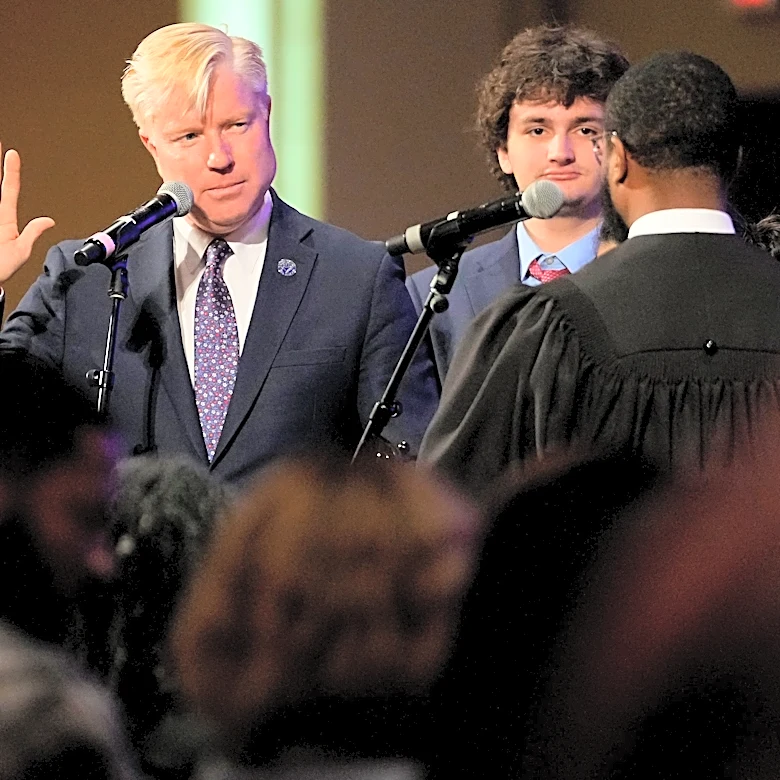
U.S. Representative Tom Kean Jr. has introduced the AI Emergency Button Act, legislation that would require developers and operators of advanced artificial intelligence systems in the United States to incorporate a human-controlled shutdown mechanism.
According to Congressman Kean, this bill aims to ensure that humans maintain control over complex AI systems, even as they become more sophisticated. The proposed legislation mandates that each covered entity must include this technical capability. The bill also directs the Secretary of Homeland Security, in consultation with relevant federal agencies, to issue regulations within 90 days of the measure becoming law to ensure compliance. U.S. Senator John Kennedy, R-La., introduced a similar version of the AI Emergency Button Act in the Senate earlier this month. This initiative is part of a broader effort by Congressman Kean to address AI-related concerns, following previous legislation like the Spot the Fakes Act, which would require labels on AI-generated content, and the LIFT AI Act, focused on improving AI literacy in K-12 education.
Why It's Important?
This legislation is important because it addresses growing concerns about the safety and control of advanced artificial intelligence systems. As AI technology rapidly evolves, the potential for autonomous systems to operate without human oversight raises significant ethical and practical questions. Mandating a human-controlled shutdown mechanism could serve as a critical safeguard, preventing unintended consequences or malicious uses of powerful AI. For the U.S. technology industry, this bill could introduce new compliance requirements and potentially influence the design and development processes of AI systems. Companies developing advanced AI would need to integrate these shutdown capabilities, which could impact innovation timelines and costs. From a national security perspective, ensuring human control over AI is crucial, especially for applications in critical infrastructure or defense. This bill reflects a proactive approach by lawmakers to establish regulatory frameworks for AI, aiming to balance technological advancement with public safety and human agency. It also signals a broader legislative trend towards greater oversight of AI development and deployment in the United States.
What's Next?
Following its introduction, the AI Emergency Button Act will proceed through the legislative process in the House of Representatives. Given that a similar bill has been introduced in the Senate by Senator John Kennedy, there is potential for bipartisan collaboration and movement on this issue. The next steps would involve committee hearings, potential amendments, and votes in both chambers. If the measure becomes law, the Secretary of Homeland Security, in consultation with other federal agencies, would be tasked with developing and issuing specific regulations within 90 days. This regulatory phase would be critical in defining the technical requirements for the human-controlled shutdown mechanisms and outlining compliance standards for AI developers and operators. Industry stakeholders, including AI companies and research institutions, will likely engage with federal agencies during this period to shape the final regulations. The implementation of these regulations could lead to significant changes in how advanced AI systems are designed, tested, and deployed across various sectors in the U.S.
Beyond the Headlines
The AI Emergency Button Act delves into the fundamental question of human control in an increasingly AI-driven world. Beyond the immediate technical requirements, this legislation touches upon the philosophical and societal implications of artificial intelligence. It underscores a growing recognition among policymakers that the rapid advancement of AI necessitates a re-evaluation of the relationship between humans and machines. The concept of an 'emergency button' for AI systems highlights a desire to retain ultimate human authority, preventing scenarios where AI operates beyond human intervention. This could set a precedent for future AI regulations, emphasizing safety, accountability, and ethical considerations in AI development. The bill also implicitly acknowledges the potential for AI to become so complex that its behavior might be unpredictable, making a failsafe mechanism essential. This legislative move could influence global discussions on AI governance, encouraging other nations to consider similar safeguards and contributing to the establishment of international norms for responsible AI development and deployment.