





What's Happening?
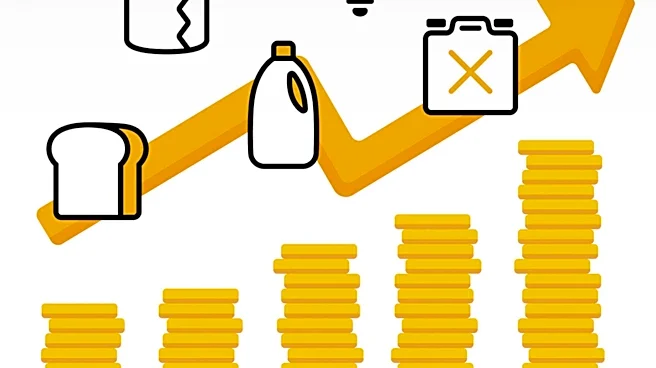
U.S. households are incurring an estimated annual cost of $1,745 due to import tariffs, according to a report from the U.S. Congress Joint Economic Committee. This financial burden is exacerbated by rising inflation and increased costs for gas and utilities,
making the holiday shopping season particularly expensive. In response to these economic pressures, an artificial intelligence (AI) chatbot, ChatGPT, has offered strategies for consumers to mitigate the impact of tariffs on their holiday budgets. These recommendations include prioritizing gifts with lower tariff exposure, such as experiences or gift cards, and exploring American-made alternatives. The AI also advises strategic shopping during sales events for import-heavy categories like toys, clothing, and electronics, while cautioning against direct purchases from overseas sellers to avoid potential complications and additional costs.
Why It's Important?
The significant annual cost of tariffs on U.S. households highlights a direct financial impact on consumers, reducing their purchasing power and contributing to overall economic strain. This situation affects various U.S. industries, as tariffs can increase the cost of imported raw materials, even for domestically produced goods, thereby impacting their competitiveness. The advice from an AI chatbot underscores a growing trend of consumers seeking digital tools for financial planning and cost-saving strategies in a complex economic environment. For businesses, understanding these consumer behaviors and tariff impacts is crucial for pricing strategies, supply chain management, and marketing efforts, especially during critical retail periods like the holidays. The emphasis on American-made alternatives could also stimulate domestic production, but only if these products can genuinely compete on price after accounting for all input costs.
What's Next?
Consumers are likely to increasingly adopt strategies like those suggested by AI, focusing on tariff-proof gifts and American-made products, which could shift demand patterns in the retail sector. Businesses, particularly those reliant on imported goods, may need to re-evaluate their sourcing and pricing models to remain competitive. The ongoing discussion around tariffs and their impact on household budgets could also influence future trade policy debates, potentially leading to calls for adjustments in tariff structures. Retailers will likely continue to leverage sales and promotions to attract budget-conscious consumers, especially in categories heavily affected by import duties. The caution against direct overseas purchases suggests a continued reliance on established retail channels for consumer protection and reliability.
Beyond the Headlines
The reliance on AI for financial advice, as seen with ChatGPT's recommendations, points to a broader societal shift towards integrating artificial intelligence into everyday decision-making. This raises questions about the accuracy and reliability of AI-generated advice, particularly in nuanced economic matters. Furthermore, the discussion around tariffs touches upon the ethical considerations of trade policies and their impact on the average citizen. The push for American-made alternatives, while economically beneficial for domestic industries, also highlights the complex interplay between global supply chains, national economic interests, and consumer choices. This scenario could foster a greater awareness among consumers about the origins of their products and the hidden costs associated with international trade, potentially influencing long-term purchasing habits and brand loyalties.